‘Then a change began slowly to declare itself. The horizon became clearer, field and tree came more into sight, and somehow with a different look; the mystery began to drop away from them.’
The words above are from one of my favourite books – The Wind in the Willows by Kenneth Grahame – and are found in the chapter, The Piper at the Gates of Dawn.
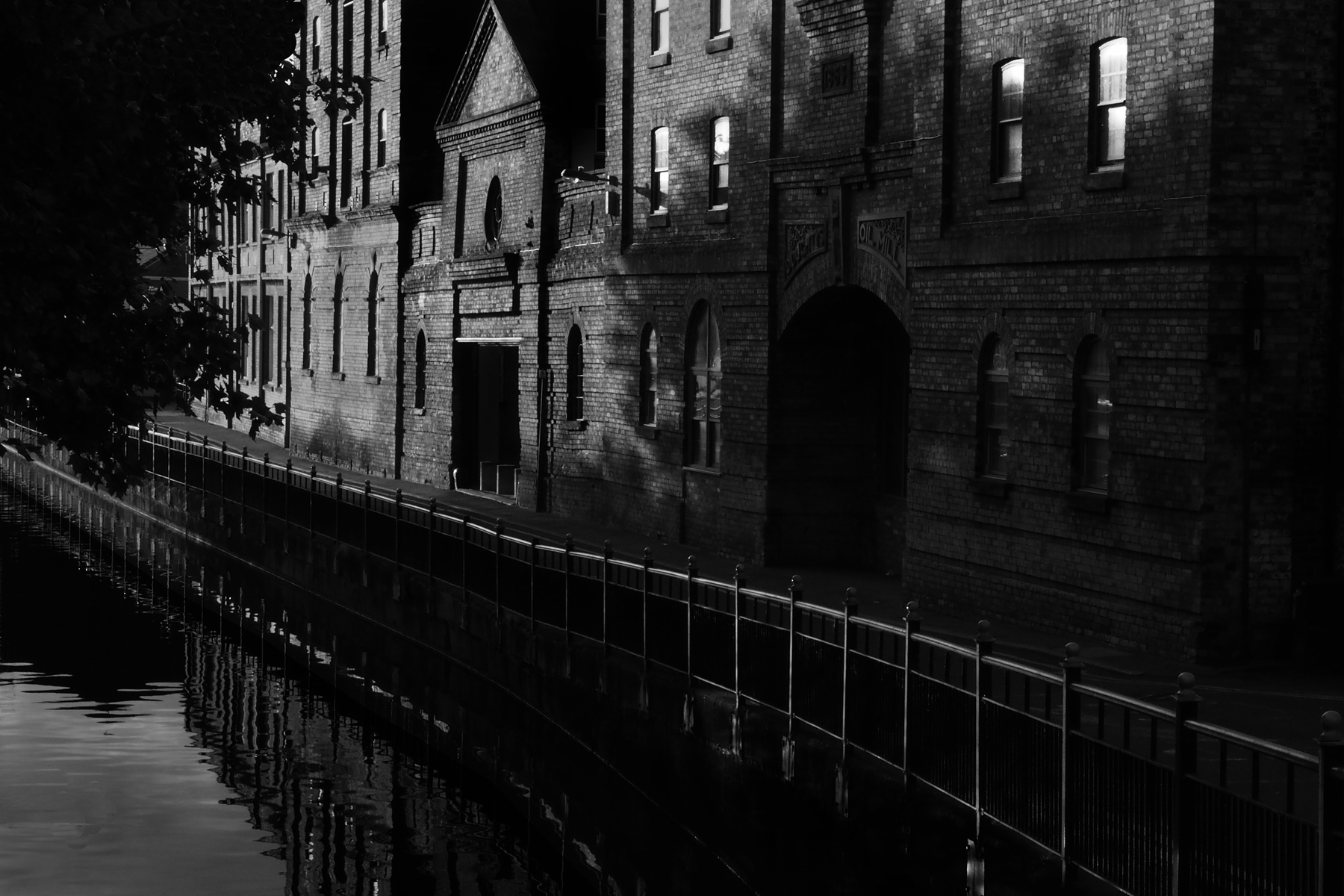
Boston, UK: 2016
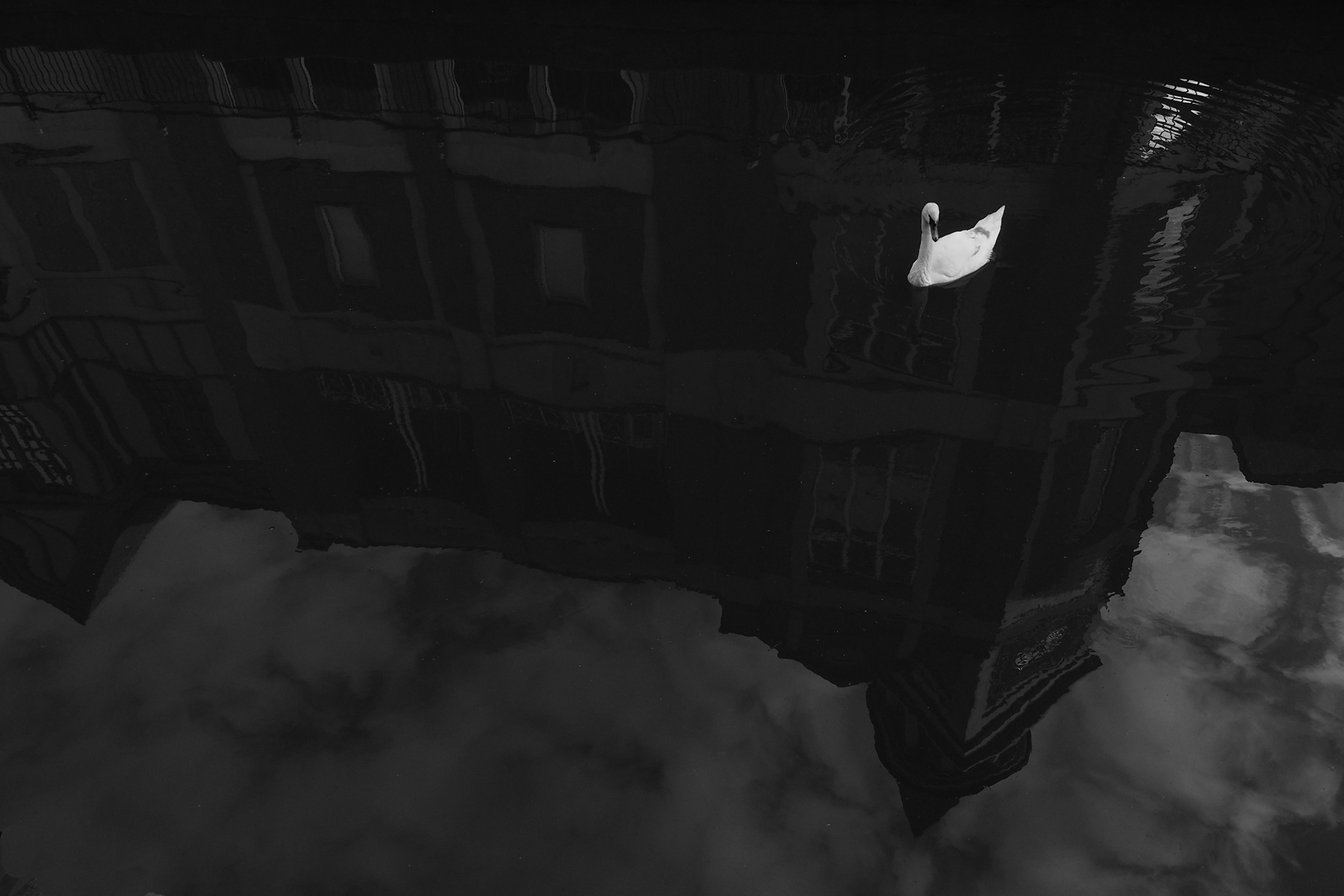
I have always been an early riser and wherever I find myself I will be up and about with my camera before sunrise. I love the way the scene – from city streets or country lanes – in front of me unfold; the deep shadows and the striking shapes they create, the slowly revealing detail, the sudden rustle that makes you start and the unseen population of all those who have been there, leaving their mark or a simple feeling of presence. The Maud Foster drain, cut in 1568 (when Boston was one of the wealthiest ports in Europe) and once used to transport corn and flour (the windmill in Boston still stands) is now empty of traffic. But with a little imagination…..
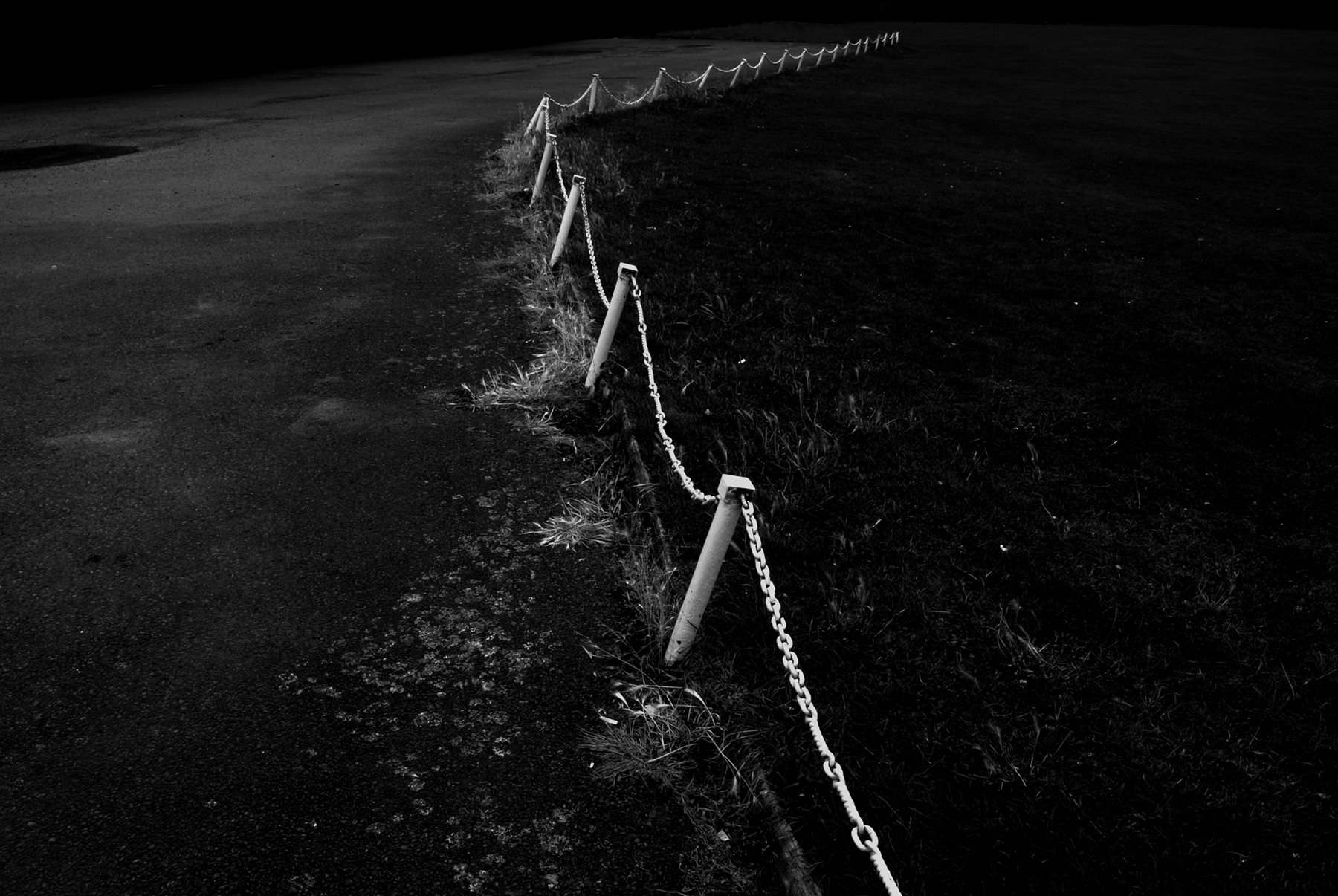
Boston, UK: 2016Gainsborough, UK: 2016
I’m a Lincolnshire lad and I love my home county. All the photographs here form part of my ongoing project: Notes in Passing, Lincolnshire. I’ve been tramping the streets and lanes for many years and this summer I aim to try and fill in some gaps and try to make some sense of what I have. The county town, Lincoln is a particular favourite of mine when it comes to exploring.
Lincoln, UK: 2014Lincoln, UK: 2016
I don’t always get photographs, but my early morning walks are never unproductive; the experience of being there at that time is reward enough.
For the tech-minded, the camera used was an Olympus OMD (bar one, which was shot with an earlier Olympus digital) and a Zuiko Digital short zoom lens. Thanks for visiting and here’s a swan:
Continuing my story of when we were treated to a day of free music, laid on by the town council, I thought I would take a ‘behind the scenes’ look. It wasn’t difficult to access the dressing room of local favourites, Harry the Spider’s Coming Out Party; a friendly bunch, with an image that was both wacky and plausible (they had a strong set of original music), they were happy to have their big day recorded.
Simon ‘Hilly’ Hill, guitaristSean Ingoldsby, guitarist
Harry the Spider’s was the brainchild of Sean Ingoldsby and his brother, Garry. Inspired by Sean’s idea of stories aimed at primary school children (or so I believe), the songs followed Harry and his friend, Elvis Goldfish through a number of scenarios (Wild Elvis Goldfish and Flies For Tea are two numbers I recall). The set was filled out with gothic parodies about Dracula and the like before finishing with a storming version of an old classic rewriiten as Ghost Spiders in the Sky.
Jo Westwood, backing vocalistAlan ‘Pilly’ Pilsworth, drummerKevin ‘Finch’ Brown, who was also performing that day, pops in to say hello
I cannot find the pictures I made of the band on stage, so here is one that I shot on the day, downloaded from my facebook page, so apologies for the quality:
‘His name was Elvis Goldfish, Wild Elvis was his name…’
I remember that the band went down pretty well. A few more crowd shots to finish and thanks for visiting.
...
For the tech-minded, the camera I used was an Olympus OM1 with various Zuiko lenses. Film stock was Kodak Tri-X Pan.
One day in May, 1984: I think it was a bank holiday. The inaugural ‘Scunthorpe Free Rock’ music festival took place at the Ashby Ville municipal playing fields, just beyond the steelworks and at the bottom of the interestingly named Mortal Ash Hill, the main eastern approach to this Lincolnshire town. The free concert was provided by the local council and was to run annually for a time; the last free rock concert took place in 1987. That last event was dogged by bad weather: not so, this one. It was a grand day out.
.
I don’t know exact numbers but it seemed to be a great turnout; most where regulars of the ‘alternative nights’ at the legendary Baths Hall but the event attracted a fair sampling of the rest of the local population.
.
Topping the bill that day were The March Violets, a ‘goth’ outfit from Leeds. I remember that the lead vocalist, Cleo Murray, was the object of desire for my pal Charlie. I often wonder about Charlie; I know nothing much about him except that at some time he introduced me to the music of Christian Death, but that’s another story.
.
Also on the bill that day were The Geisha Girls – who had some success with a single called ‘I’m a Teapot’ (check it out on YouTube) – and local heroes Harry the Spider’s Coming Out Party (they got their name from a Cadbury’s ad). The following year I joined the band as guitarist, but I digress.
A Geisha GirlHTSCOP guitarist with ‘roadie’ and fan
The event was compered by deejay and local legend Steve Bird who maintained the tempo during breaks between acts with selections from his Baths Hall playlist.
Steve Bird
I’ll end part one of this blog with a couple of crowd shots. In part two, I’ll be going behind the scenes and will include some more crowd shots. Later…..
..
For the tech-minded, the camera I used was an Olympus OM1, along with a variety of Zuiko lenses. Film stick was Kodak Tri-X Pan.
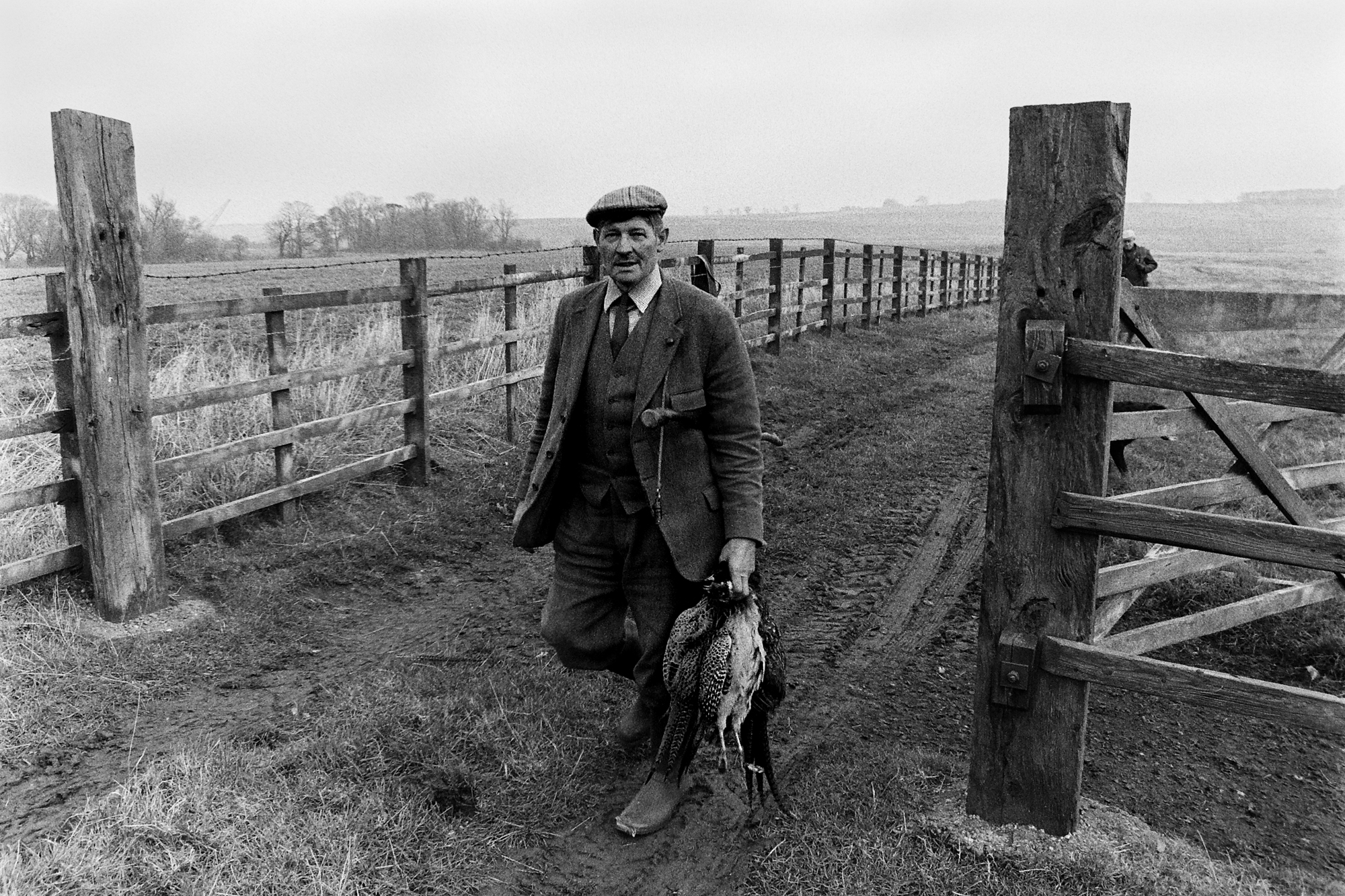
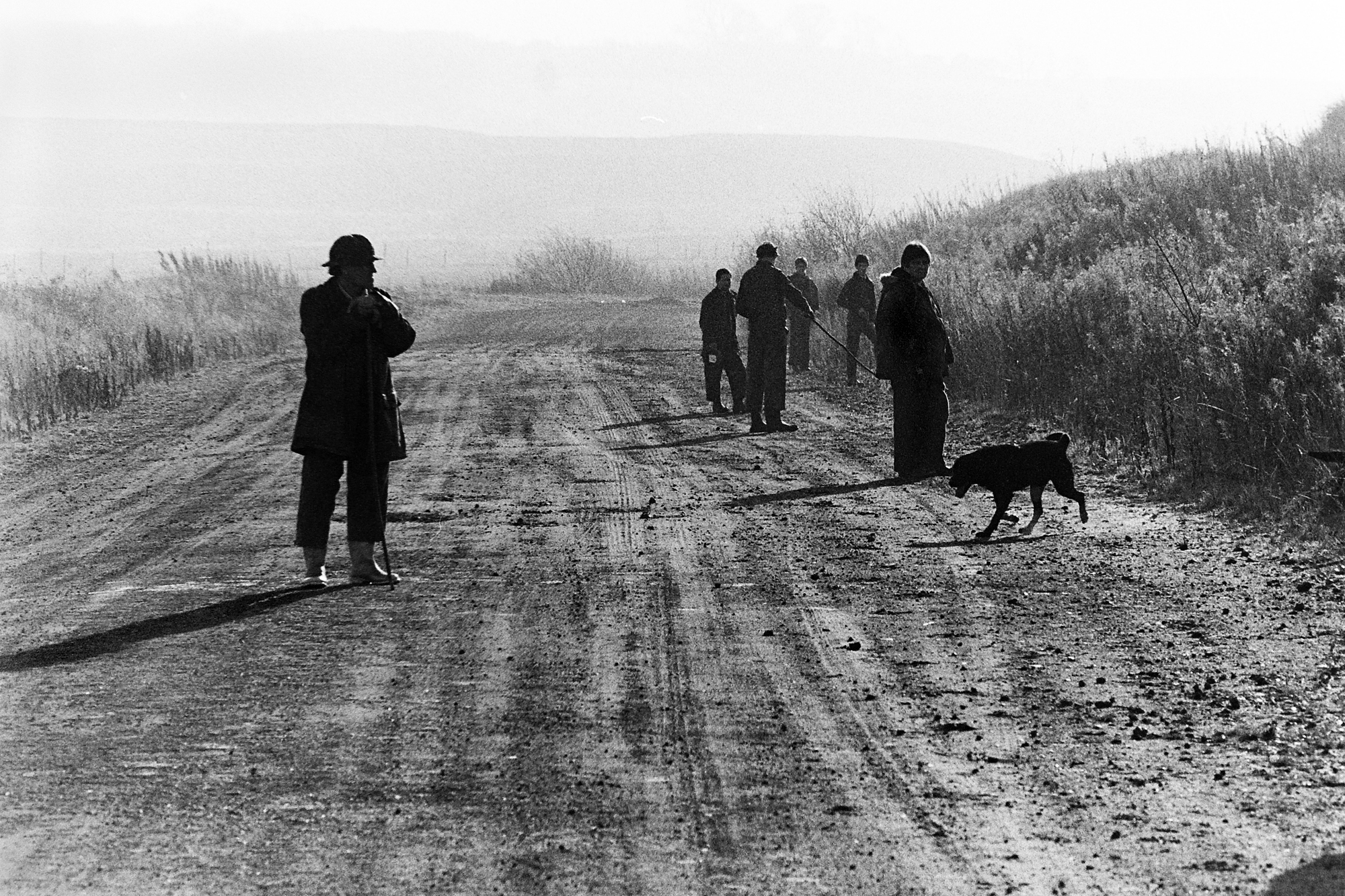
1981: it was chilly that early November morning, but dry. A fine mist was gradually disappearing but enough remained as the rising sun broke though to suggest this was going to be a reasonable day for photography.
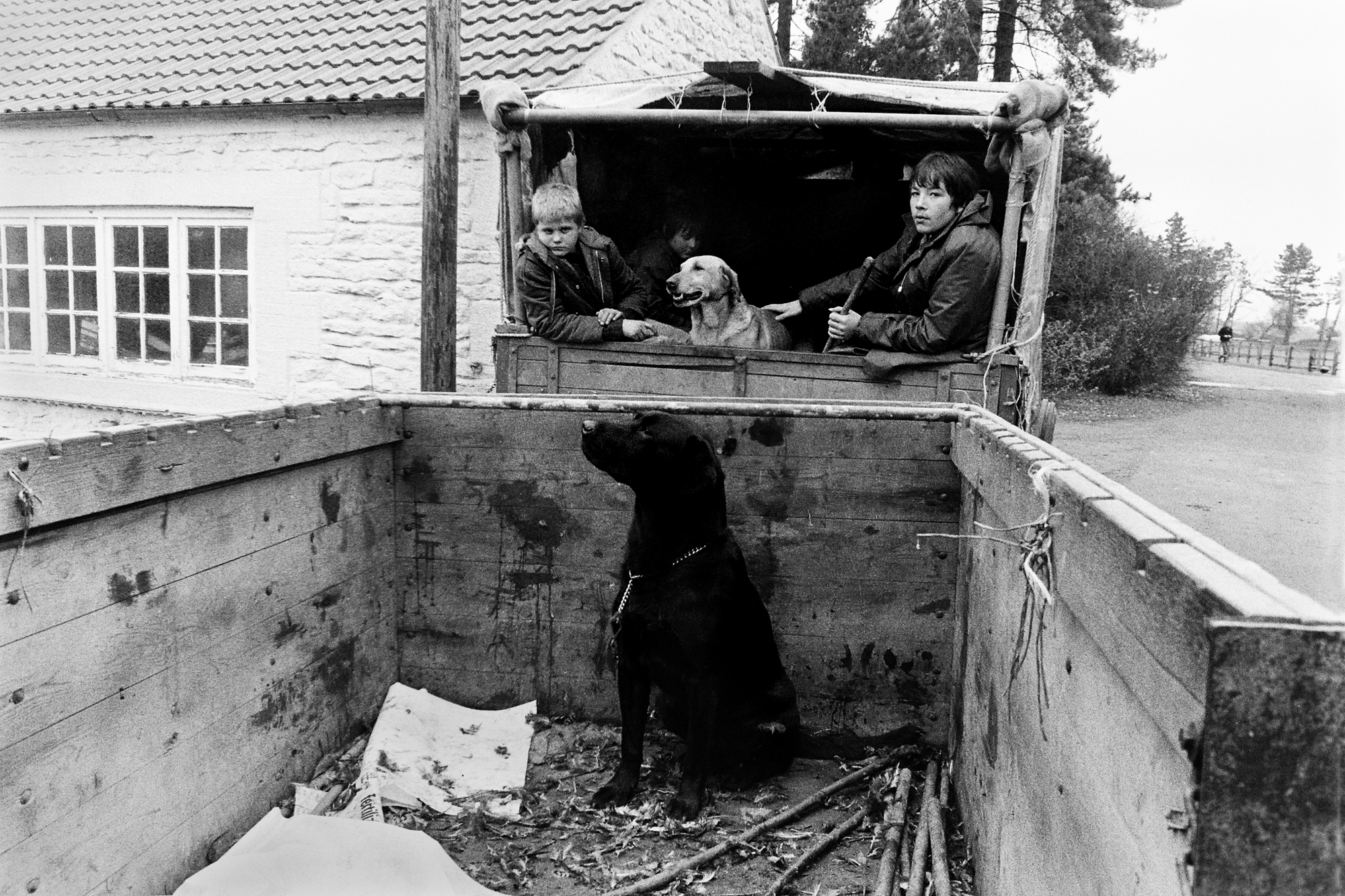
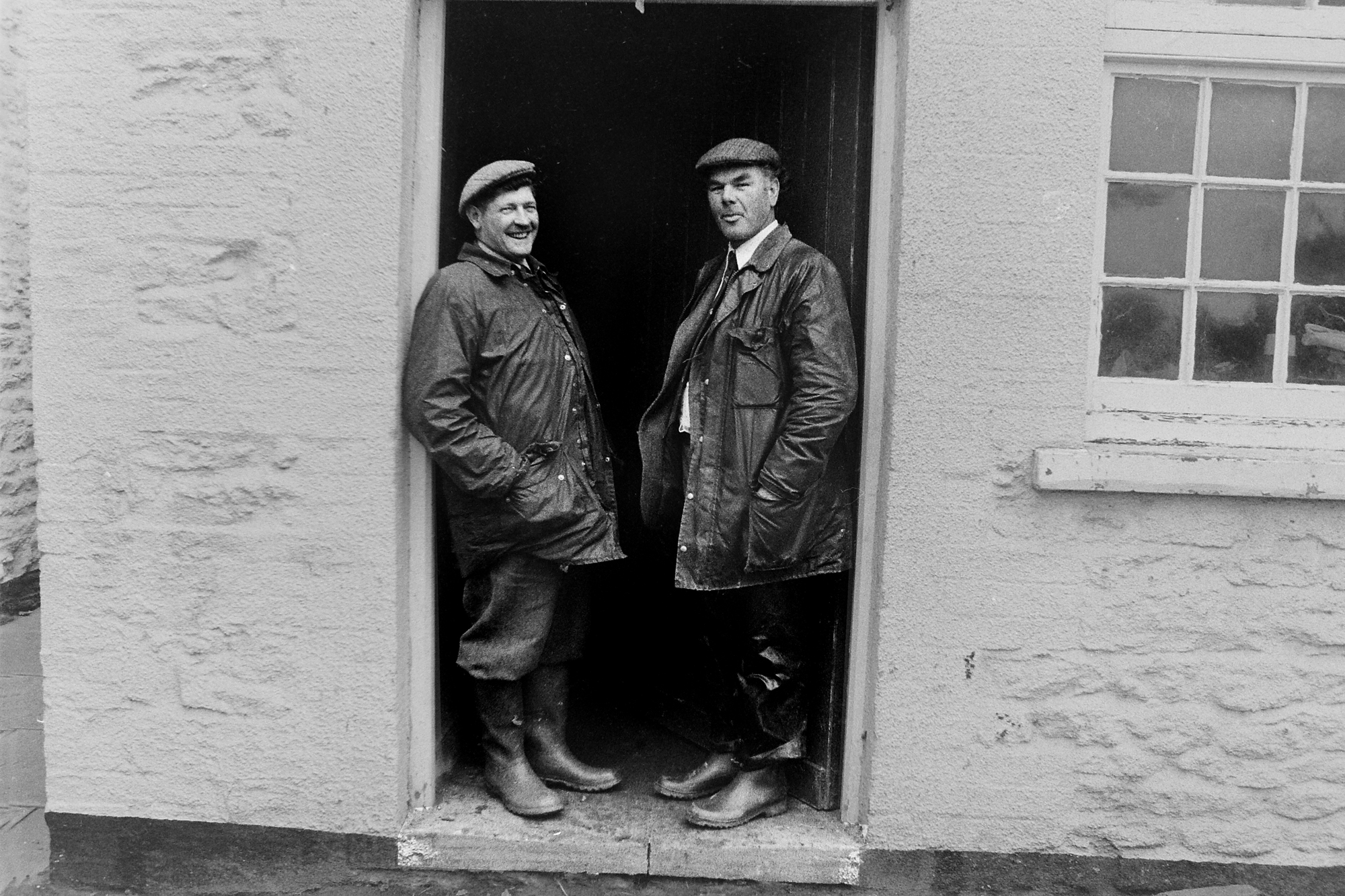
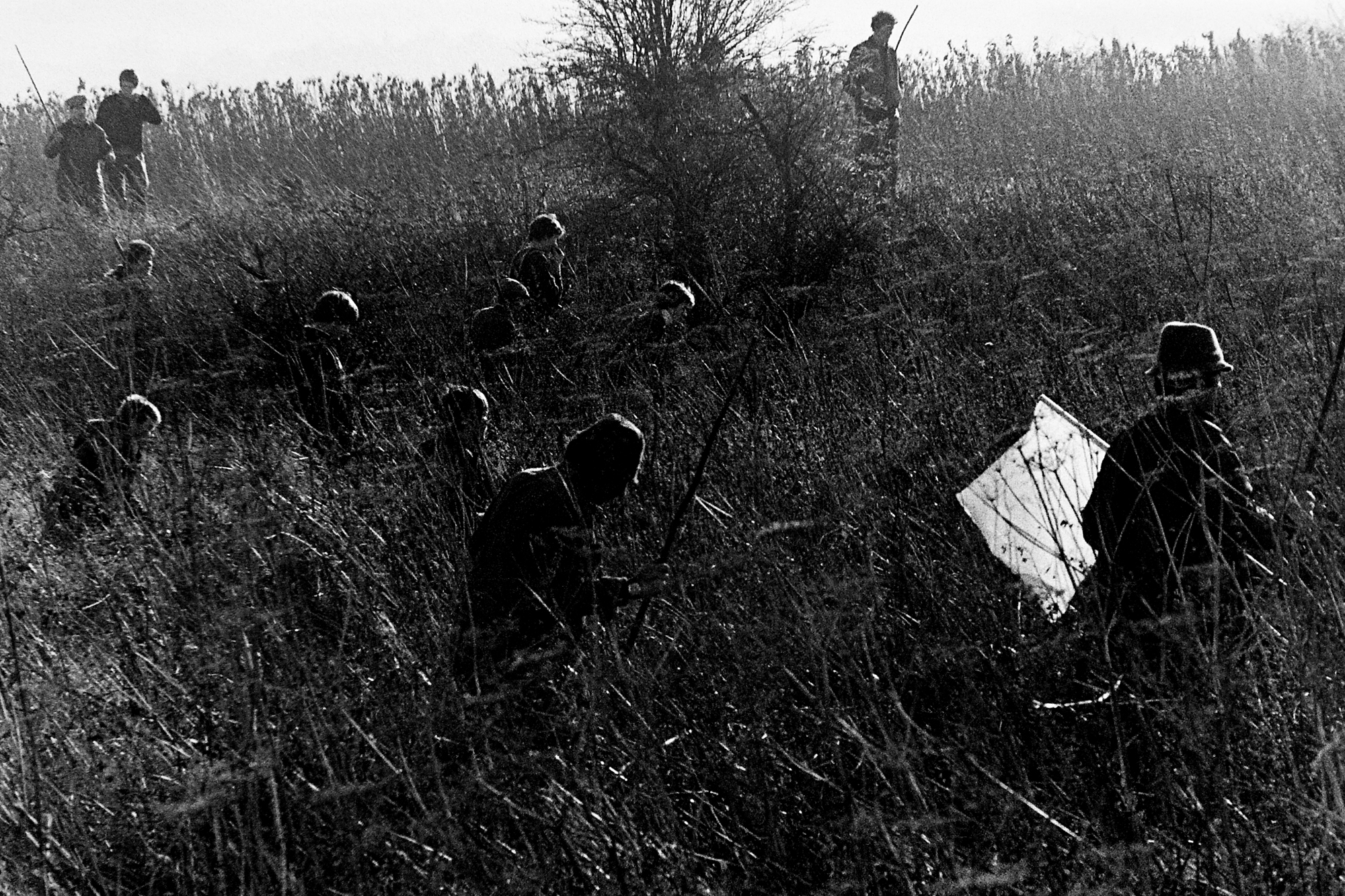
I was on an estate at Normanby, near the town of Scunthorpe in Lincolnshire. There was to be a pheasant shoot and I met the head gamekeeper, a cheerful chap, who gave me the lowdown on how he expected the day to pan out. Before the arrival of the shooting party there was much organisation to be done, he had colleagues to brief and hired local help to instruct.
The estate was extensive; a mix of forest and scrub, parkland populated by deer and arable farmland (on a visit to the area in the summer of 2018 I noticed it now hosts a wind farm, too); the job of the gamekeeper was to ensure a healthy environment for the wildlife population and, in the case of game birds, limit predation in order to maintain a harvest-able surplus for days like this one.
I don’t intend to get into the current ‘cruel sport’ debate as this is my looking back to a slice of country life; pheasants shot provided dinner for the party, provided a domestic supply and any surplus went to the local game market (see my earlier blog for a taste of that).
It all went very well; the local help ‘beat’ the scrub, the dogs behaved and the guests were happy. I got the impression that the gamekeeper and his team were having a thoroughly good time – it was a grand day out.
The photograph above provides a clue as to why, when switching from film to digital (I put that move off for as long as I could), I chose to stay with Olympus. The OMD EM5 had the same feel as the OM1 I had been using when out and about in the many streets, byways and highways I have been walking for nearly 40 years.
I studied photography at Trent Polytechnic in Nottingham (UK), graduating in the late 1970s. During the early 1980s I tried to make a go of it, but never managed to become a professional photographer; since then I have continued to do project based work for myself and have a visual diary of my life so far which is hugely satisfying.
I bought my first OM1 in 1980 along with a Zuiko standard lens. I added to my lens collection over the next few years and bought another body too, I still have all the gear and it all still works fine. The photograph below shows everything I had possessed up until my change to digital.
My old Olympus gear, shot with my OMD!
The great thing is that, using an adapter, I can use my old lenses on my digital camera. The focal length alters, of course, but it gives me options. Or gave me; to cut a long story short, my shutter failed whilst trying out my old 200mm lens and I can’t get it into my head that this was probably nothing to do with the lens. This happened a couple of years ago and I’ve never used the adapter since. My bad. I was only a week or so without a camera, Olympus Thailand did a great job in replacing the shutter and the repair was way, way cheaper than having to shell out for a new body, which I couldn’t afford to do anyway. This episode didn’t put me off Olympus cameras and mine has worked fine since then.
I haven’t been able to get out of my old habit of occasionally looking through the viewfinder for quite a time, waiting for things to come together; this didn’t matter in the old days but can be a problem with the digital video display, due to battery drain. Easily remedied by carrying a fully charged spare battery, just in case. Luckily I don’t make that many photographs – almost as if it was still 1980 and I was down to my last roll of tri-x – and this economy means I can continue to work as I always have.
Though I mainly use my short zoom I did buy a Zuiko digital 17mm lens. This is a very small lens and, with an aperture of f1.8, it’s pretty fast. Coupled with the compact size of the OMD, it is perfect for those times when I don’t want to be too visibly a photographer; I’ve never used a camera bag either, much for the same reasons. And I tend to dress down, but I digress. So there you go; I’ve looked at other cameras, including the second and third generation OMDs, but have yet to be tempted. It may be that the things are too expensive and I can’t afford to change – or it may be that I am quite happy with what I’ve got.
The shot above was made by hanging out of a hotel window in Bang Saen, a small community that meanders alongside the eastern seaboard of Thailand, somewhere between Bangkok and Pattaya. I have a real fear of heights and felt really uncomfortable at the time, four floors up; it was early morning and I’d opened the window for a breath of fresh air when I noticed, below me, a guest taking advantage of an empty pool. His progress was leisurely and he seemed to form a harmonious relationship with the environment. I leaned out as far as I dared and made some photographs; in this one I believe I managed to show that relationship.
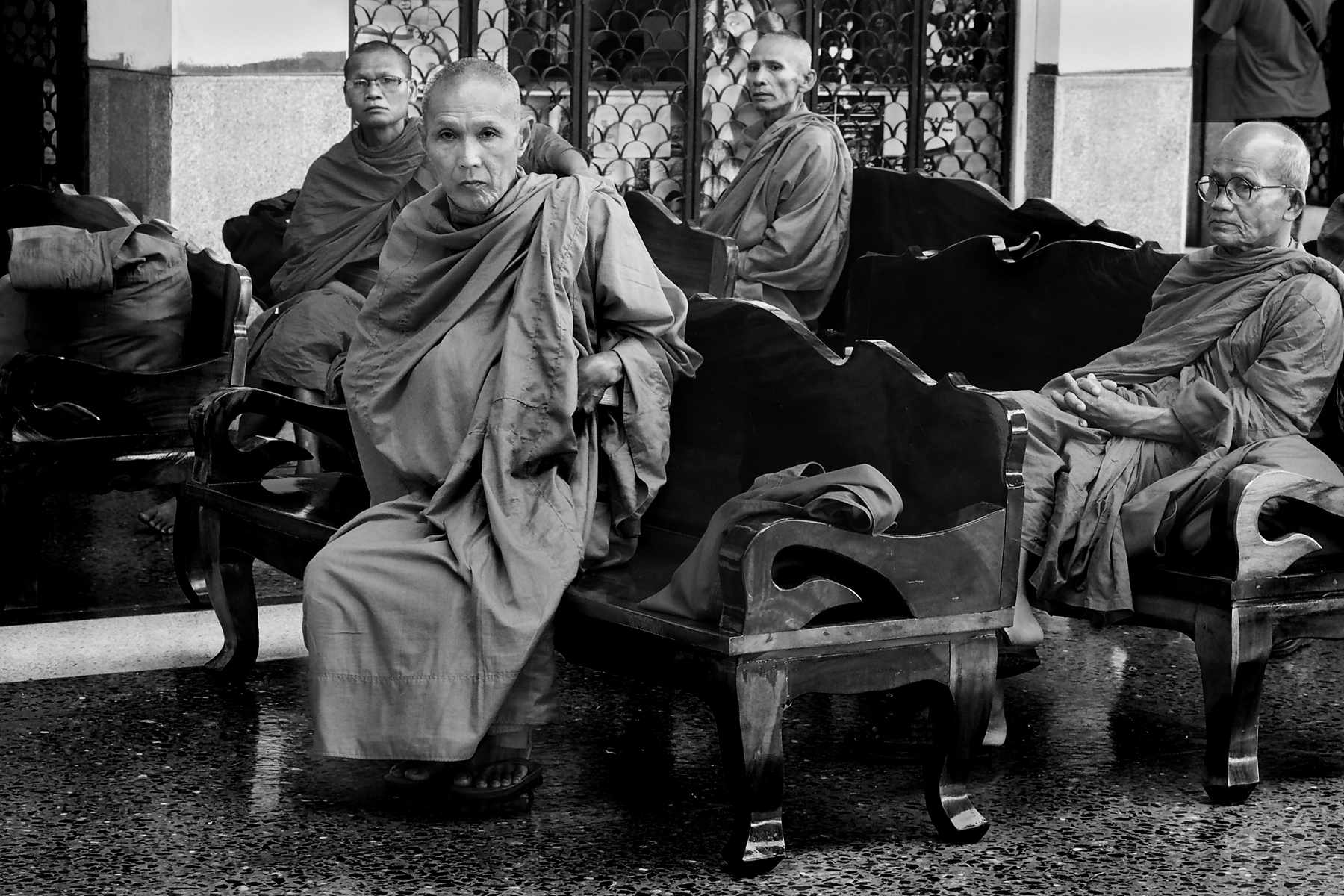
I love travelling by train and I love railway stations. The photograph above, from one of many visits to Bangkok railway station (Hualamphong is the local name), was a long time coming. I had spotted an arrangement of three monks sat in the large waiting hall. As I considered the scene, I noticed another monk making his way towards the group. The hall was very busy and I felt a little exposed as I waited, camera to my eye, for a picture to take shape – it seemed like an eternity although it was probably less than half a minute – and I was lucky when the arriving monk sat down in a position I couldn’t have got better if I had been orchestrating the shot. By this time the monks were very aware of my presence – I think that enhanced the photograph – and, after a smile and a polite nod, I went on my way.
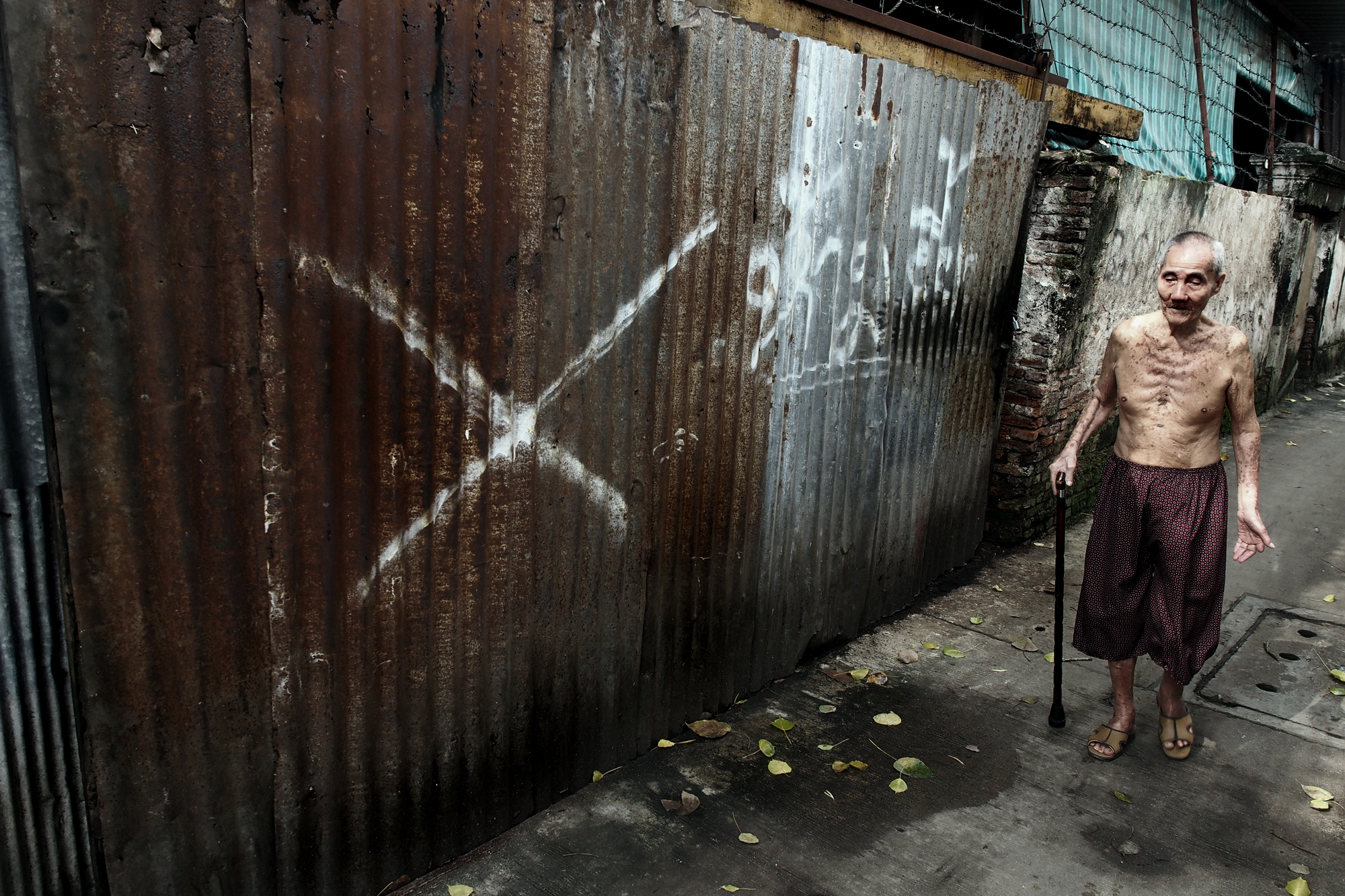
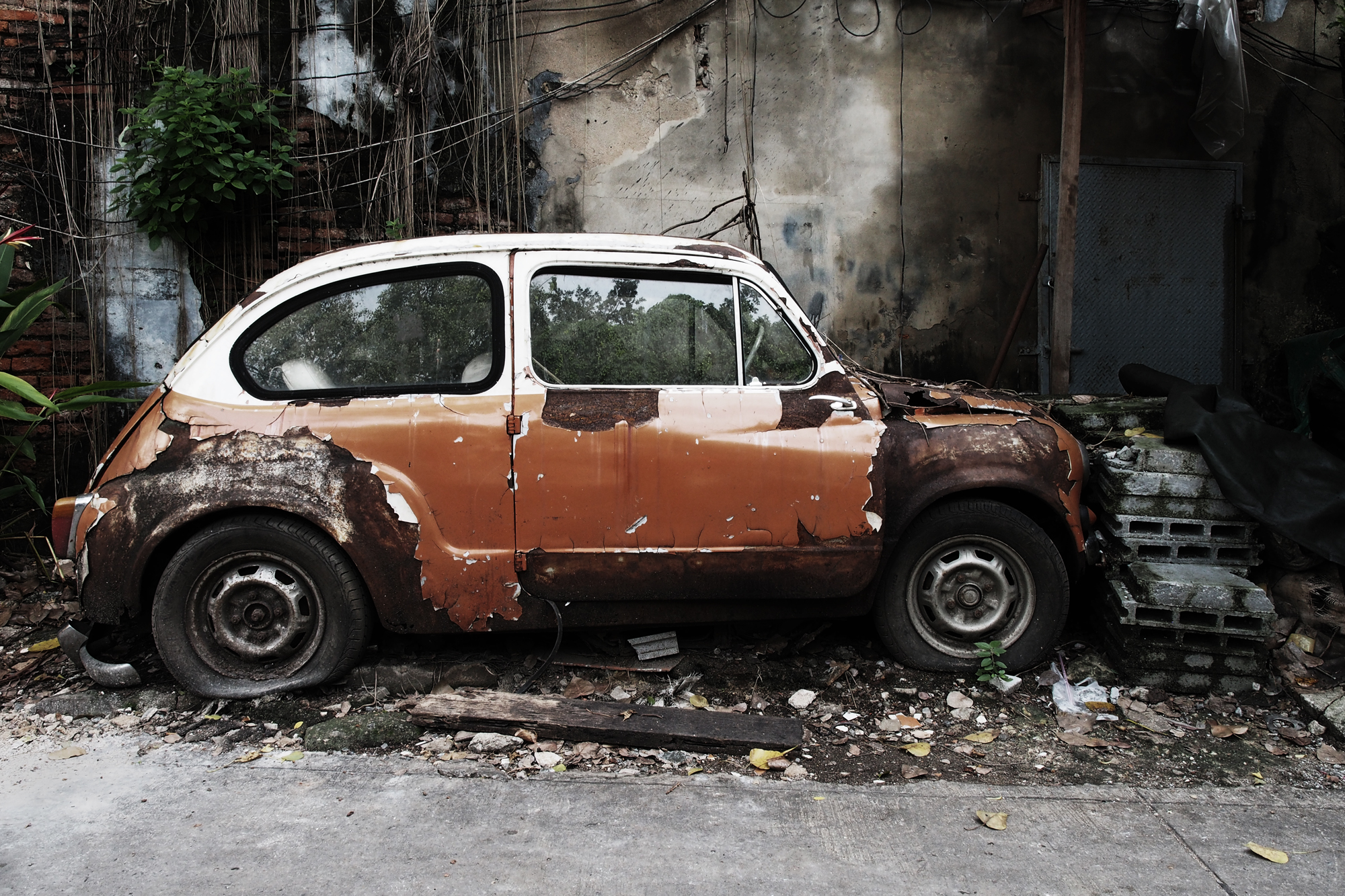
Above are a couple of photographs from a project that I am resting for a while. After more than 40 years of monochrome photography I felt I’d like to do a series in colour. This turned out to be a mistake; I hadn’t considered how different the approach would be and felt that what I was producing were mono photographs in colour rather than colour photographs. The two examples are the best of a poor bunch. However, the experience of my many visits to Talat Noi – a very old community on the fringe of Bangkok’s Chinatown – was enjoyable and thoroughly interesting. Another area I considered for colour work is Kudi Jeen, – situated on the Chao Praya river – once the Portuguese quarter of Bangkok and now home to a small Chinese community. The photograph below shows the catholic church from the labyrinth of narrow alleyways that make up the area.
Chatuchak Weekend Market, Bangkok is one of the largest outdoor markets in the world and attracts visitors in their thousands. I like to go there very early, before the crowds arrive, for the photographic opportunities the place offers me. Below are a couple of pictures from what is proving to be an extended ‘project in progress’.
I’m currently thinking I may have to brave the crowds and revisit the market during peak hours in order that I may provide a contrast to the shots I already have.
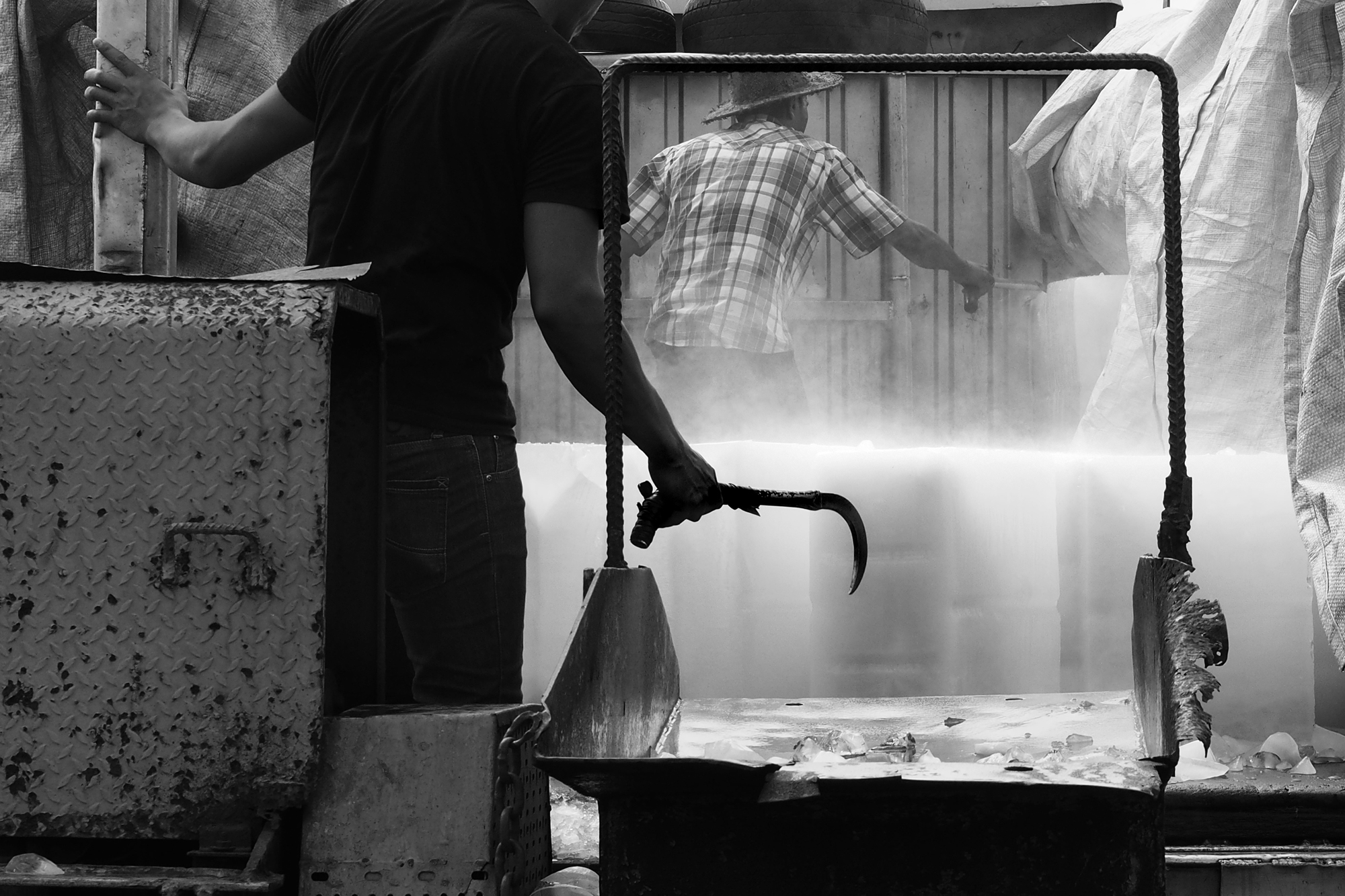
The photograph above was made during a short break in Bang Saray, a busy fishing harbour on the eastern seaboard between Pattaya and Sattahip. This shot was taken on the arrival of the ice truck; great blocks of ice were put through a crushing machine before being loaded onto the fishing boats in a process fascinating for the speed at which it was completed. I like this photograph for the graphic starkness and I felt there was a narrative potential that went beyond the real scenario. I called it ‘the iceman cometh’: though O’Neill’s play of the same title has nothing to do with trawling, it does address the need for self deceptions in order to carry on with life (thanks, Wikipedia).
In 2016, I was fortunate to spend an hour or so in a makeshift school at the Mae La refugee camp on the Thai/Myanmar border. This is one of my favourite images from that visit and shows Burmese students learning English in an open classroom. I liked the light, the air of study and the contrasting relationship with the camera of the girl on the left. Most of all, I really enjoyed being there for that brief moment.
Dogs are everywhere in Thailand but they rarely trouble you if you act normal and pay them no attention. This is my favourite photograph of a soi (street) dog, not so much for him but for the way the frame has split – almost like two halves put together – in a way that I didn’t notice at the time of exposure. I like to think that it confirms the important role that the subconscious plays in determining the actual moment of exposure.
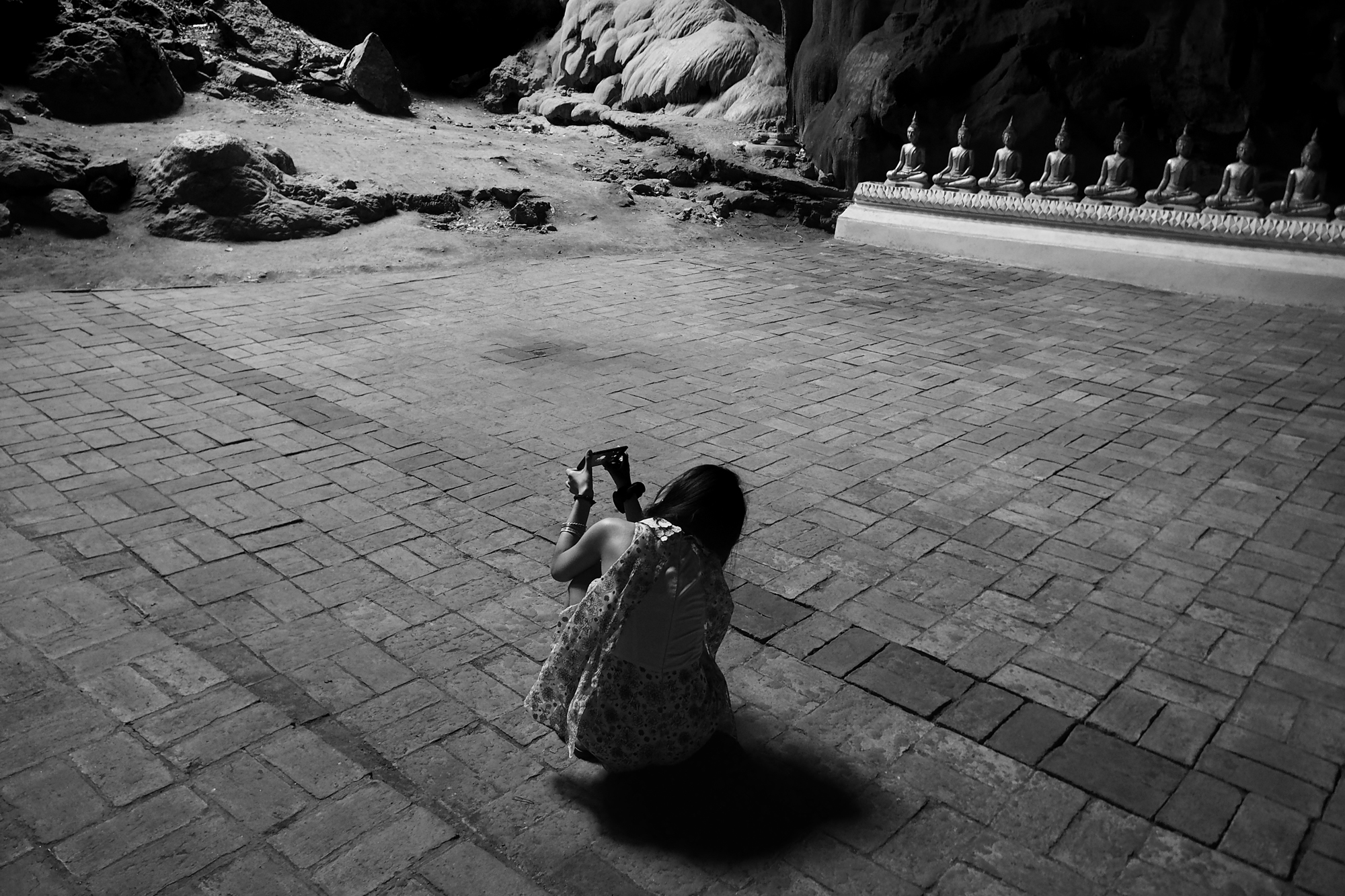
When I’m walking around I sometimes feel an impulse to stop in my tracks. Usually there is a photograph, though sometimes it is not immediately apparent and takes some looking for. Of the many photographs I have made of Buddhist statues, this one – from a car park where I was having a crafty cigarette – remains a favourite. The cultural delights of Thailand offer a wealth of possibilities for any photographer and I’m ending this blog with a photograph I took in a cave and which shows another visitor who I had seen going to great lengths for an interesting record of the moment.
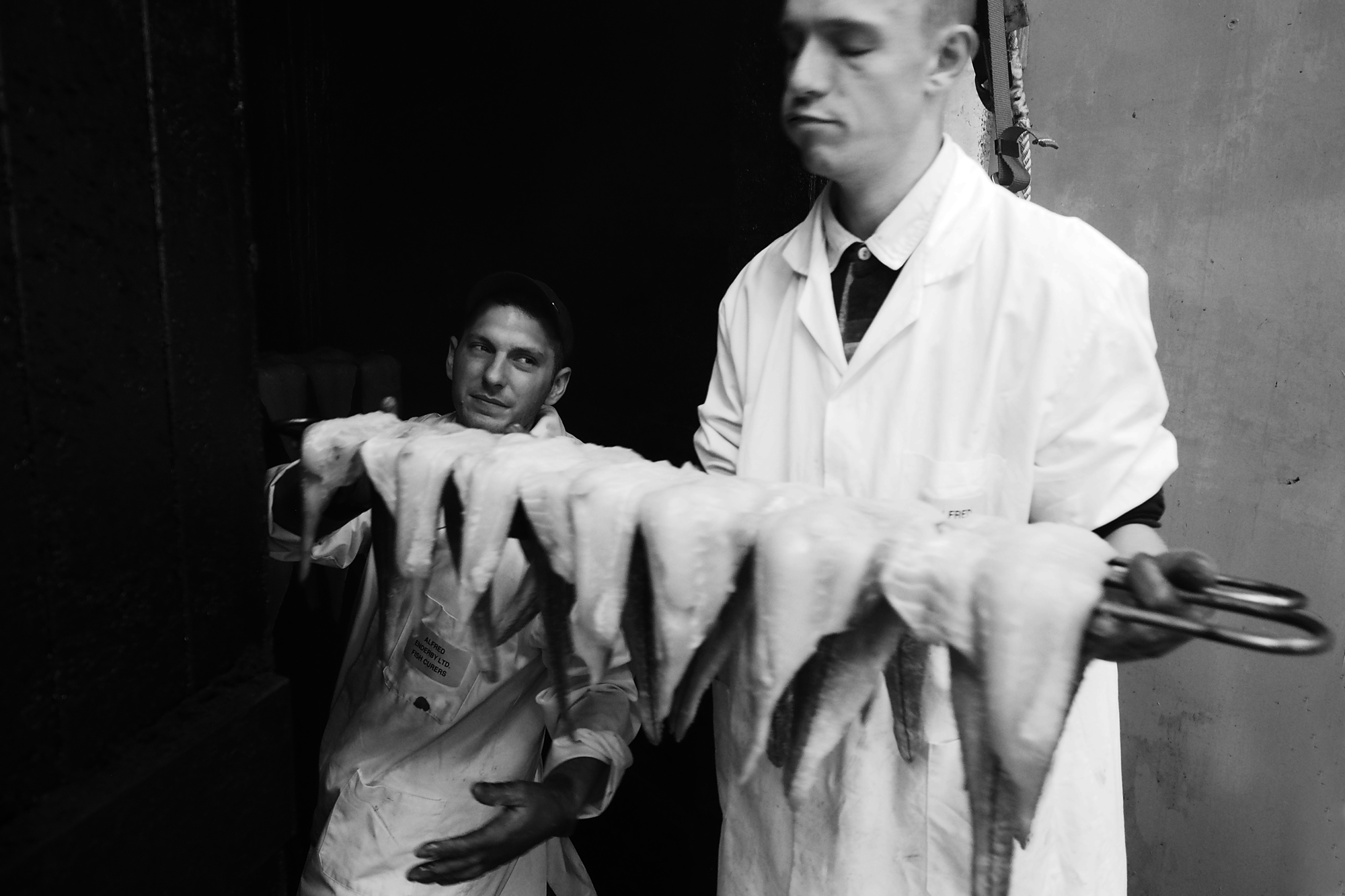
The smokehouse stands, as it has done for a century, on the fringe of an area of Grimsby Docks known locally as ‘The Casbah’. Alfred Enderby had been working at the smokehouse for many years before buying it in 1961. Eventually the business was passed on to his son, Richard who, in 2016 and after 42 years with the company, decided to call it a day. My brother, Patrick Salmon (pictured above) – a regular customer – bought the business. I made these photographs during a visit in the summer of 2017.
………………………………………………………………………………………………………………..
As the photographs above and below show, the Casbah is a long neglected area. Within my own memory I remember it as a busy place; smokehouses, ship chandlers, fish merchants cafes – the last one closed only a few years ago – and outdoor clothing suppliers. Plans are underway, I believe, to regenerate the area. Let’s keep our fingers crossed.
…………………………………………………………………………………………………………….
The close proximity to the Grimsby Fish Market – a mere stone’s throw from the smokehouse – is an advantage; fish is bought fresh in the early morning, filleted and prepared for overnight smoking and dispatched the very next day. This maintains the excellent quality of product for which Alfred Enderby’s is justifiably renowned (I’ve tried it and it is exquisitely delicious). In 2009, the smoked haddock was awarded Protected Geographical Indication (PGI) and last year both the smoked haddock and the smoked salmon won Great Taste Awards from the Guild of Fine Food. Endorsed by chefs throughout the country – including Marco Pierre White, Gary Jones and Aaron Patterson – the brand is steadily building.
……
……
The team are dedicated to the cause and expert at what they do; they put up with my presence in friendly fashion and when they chatted about the job it was with genuine enthusiasm. I even got to have tea break with them which produced my favourite photographs (below).
I really enjoyed my visit and will be there again this coming summer. I’m proud of my brother with his philosophy of maintaining traditional values and producing as good a quality product as is possible, pleased that his wife and daughter are getting involved and I really can’t wait to try some more of that awesome fish.
……
……
………………………………………………………………………………………………………………………………..‘I’m not interested in making massive amounts of money. My objective is to produce something really beautiful’
For the tech-minded, the camera used for these photographs was an Olympus OMD EM5 with a Zuiko Digital short zoom lens.

















 nic salmon's notes in passing