First steps on ‘the road to who knows where?’

Student work: 1973 – 1977

Park Lane, London 1976

Aged 18, I had an idea to become a fine artist. With that in mind I enrolled on an art foundation course in London, E17. All art disciplines were covered over a year; one of these was photography. For the first time in my life I had a ‘proper’ camera in my hand along with a couple of rolls of film which I would develop myself.

Haringey, North London 1973

The photograph above shows the children of two families I shared a house with and is on the second roll of film I ever exposed. The first was full of very unremarkable shots; I had chosen the old Covent Garden market as a subject – getting there towards midnight and staying until breakfast – and the tricky lighting, mainly bare fluorescent tubes, was too much for this novice. But I really enjoyed the experience of being there and, despite getting no decent photographs, I was hooked. At the end of the year I applied to undertake a full time course in photography.

Teddy Boy, Derby 1976

The course was split: I did my first year in Nottingham and my remaining two years in Derby. Though I perhaps didn’t know it at the time, the influence that the course had on shaping my outlook (and inlook, if there is such a thing) was immense. In fact, I still haven’t managed to shake it off to this day.

My Grandfather 1975
Derby 1976

The first book of photographs that really grabbed my attention as a student was ‘A Day Off: An English Journal’ by Tony Ray Jones (1941-1972). It included photographs made at seaside resorts (interesting to me as I was from a seaside resort); over the next couple of years I made several trips to the coast in search of my own seaside. I’m still looking.

Brighton 1976
Brighton 1976
Wells-Next-The-Sea 1976

Looking back at these photographs, it is interesting to me that my style has not really changed over the years. I find that reassuring.

Teddy Boy Dancing, Horncastle 1976
TV Smith, Lincoln 1977

I hope you’ve enjoyed this small collection of photographs. I’ll leave you with another seaside shot. As for gear, probably Nikon Nikkormat – I didn’t get my own camera until after college – with various Nikon lenses….

Whitley Bay, 1976

‘I’m no twitcher, but I know a bird when I see one.’

Child of Lir, 2015

As a photographer I can relate to the ‘twitcher’; the keen bird-watcher who chases sightings of rare birds. Chasing that elusive shot, the less successful days far outnumbering the successful ones. The defining moments, after 40-odd years, able to be counted on my fingers: no less exciting than the discovery of a rare visiting goose on the Thames marshes.

Saraburi, Thailand, 2019

I am never out and about with birds on my mind, they tend to be incidental. Even as subject I find them accidentally so, for what birds will do is difficult to anticipate. Luck often plays an important part:

Ayutthaya, Thailand 2017

I quite like those silent moments required by the photographer – armed with a longest focal length of only 80mm – in order to not scare a subject away:

Sakhla, Thailand, 2017

This approach is not necessary when there are more birds than you can shake a stick at in some public space, and they are looking upon you as provider:

Cleethorpes Boating Lake, UK, 2018

Birds are the stuff of legends and beliefs; swans, in particular crop up in lore and legend. I understand that they mate for life, though divorce sometimes happens (who knows that?):

The Kiss and a Lover Spurned, Lincoln, UK 2016

I was out not so long ago with a pal who is an excellent drone photographer: the machine created some interest, rather alarmingly I thought, with a local flock:

Drone and Birds 2018

I’ll finish with my favourite. I thought there was something of a reverential about this bird, overseeing a temple-like setting. In fact, it was beneath houses built on piles above the swamp where the very limits of Greater Bangkok meet the Gulf of Thailand:

Today’s Sermon, 2018

Thanks for visiting, as usual the photographs were made using an Olympus OMD and a Zuiko short zoom lens.

Early Doors, First Light

Lincoln, UK: 2015

‘Then a change began slowly to declare itself. The horizon became clearer, field and tree came more into sight, and somehow with a different look; the mystery began to drop away from them.’

The words above are from one of my favourite books – The Wind in the Willows by Kenneth Grahame – and are found in the chapter, The Piper at the Gates of Dawn.

Boston, UK: 2016

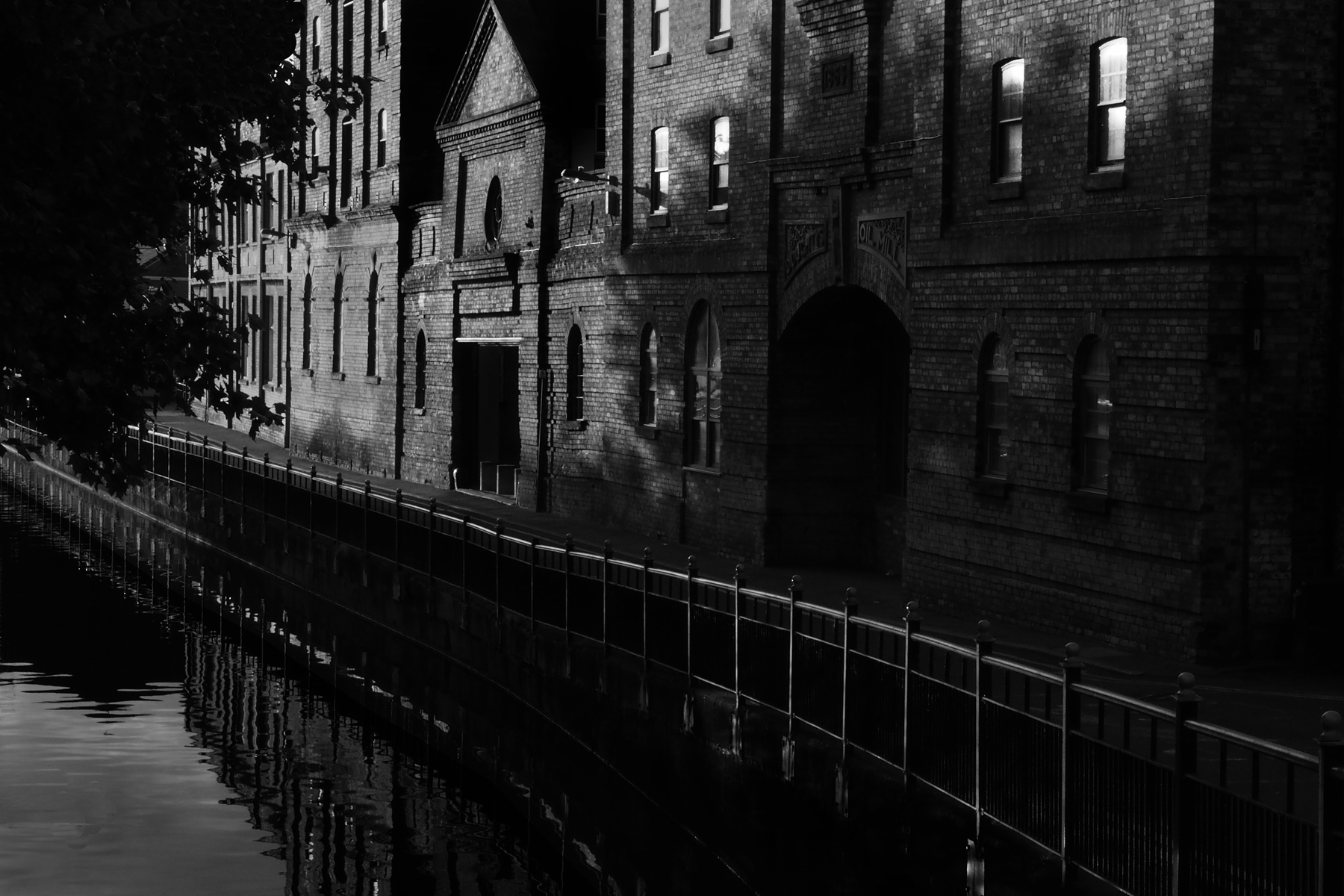
I have always been an early riser and wherever I find myself I will be up and about with my camera before sunrise. I love the way the scene – from city streets or country lanes – in front of me unfold; the deep shadows and the striking shapes they create, the slowly revealing detail, the sudden rustle that makes you start and the unseen population of all those who have been there, leaving their mark or a simple feeling of presence. The Maud Foster drain, cut in 1568 (when Boston was one of the wealthiest ports in Europe) and once used to transport corn and flour (the windmill in Boston still stands) is now empty of traffic. But with a little imagination…..

Boston, UK: 2016
Gainsborough, UK: 2016

I’m a Lincolnshire lad and I love my home county. All the photographs here form part of my ongoing project: Notes in Passing, Lincolnshire. I’ve been tramping the streets and lanes for many years and this summer I aim to try and fill in some gaps and try to make some sense of what I have. The county town, Lincoln is a particular favourite of mine when it comes to exploring.

Lincoln, UK: 2014
Lincoln, UK: 2016

I don’t always get photographs, but my early morning walks are never unproductive; the experience of being there at that time is reward enough.

Market Rasen, UK: 2011
Humberston, UK: 2018

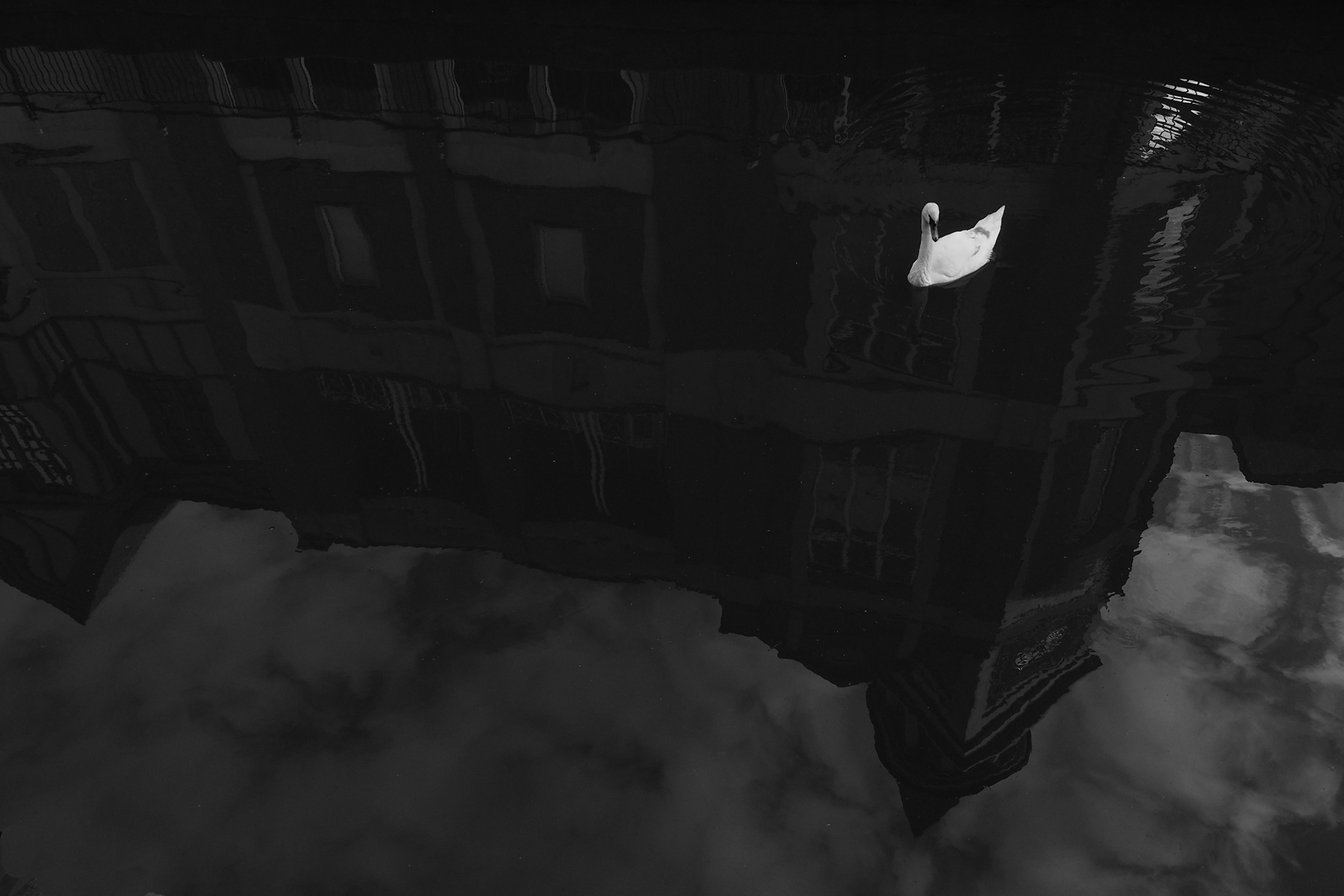
For the tech-minded, the camera used was an Olympus OMD (bar one, which was shot with an earlier Olympus digital) and a Zuiko Digital short zoom lens. Thanks for visiting and here’s a swan:

Lincoln, UK: 2016