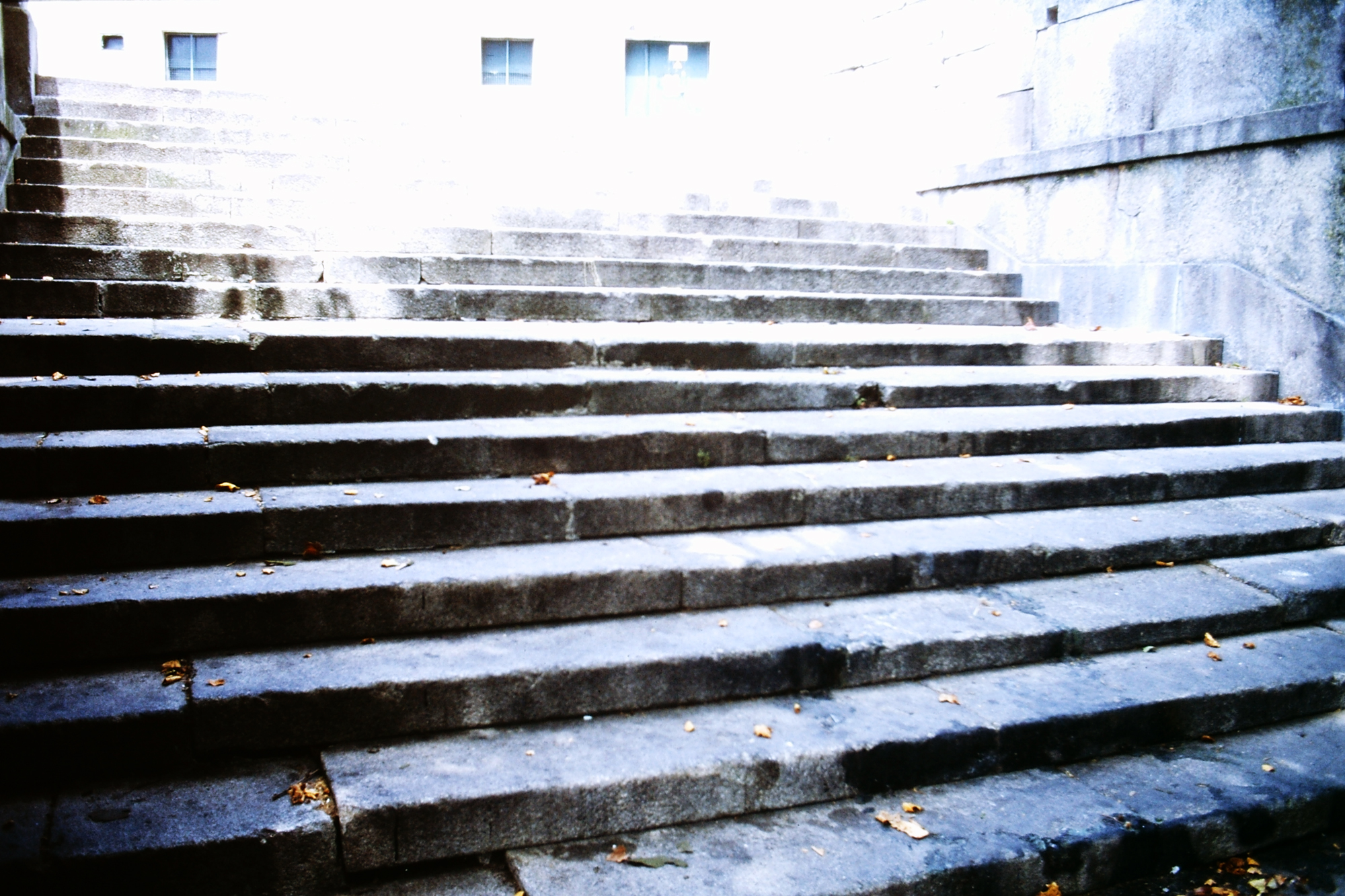
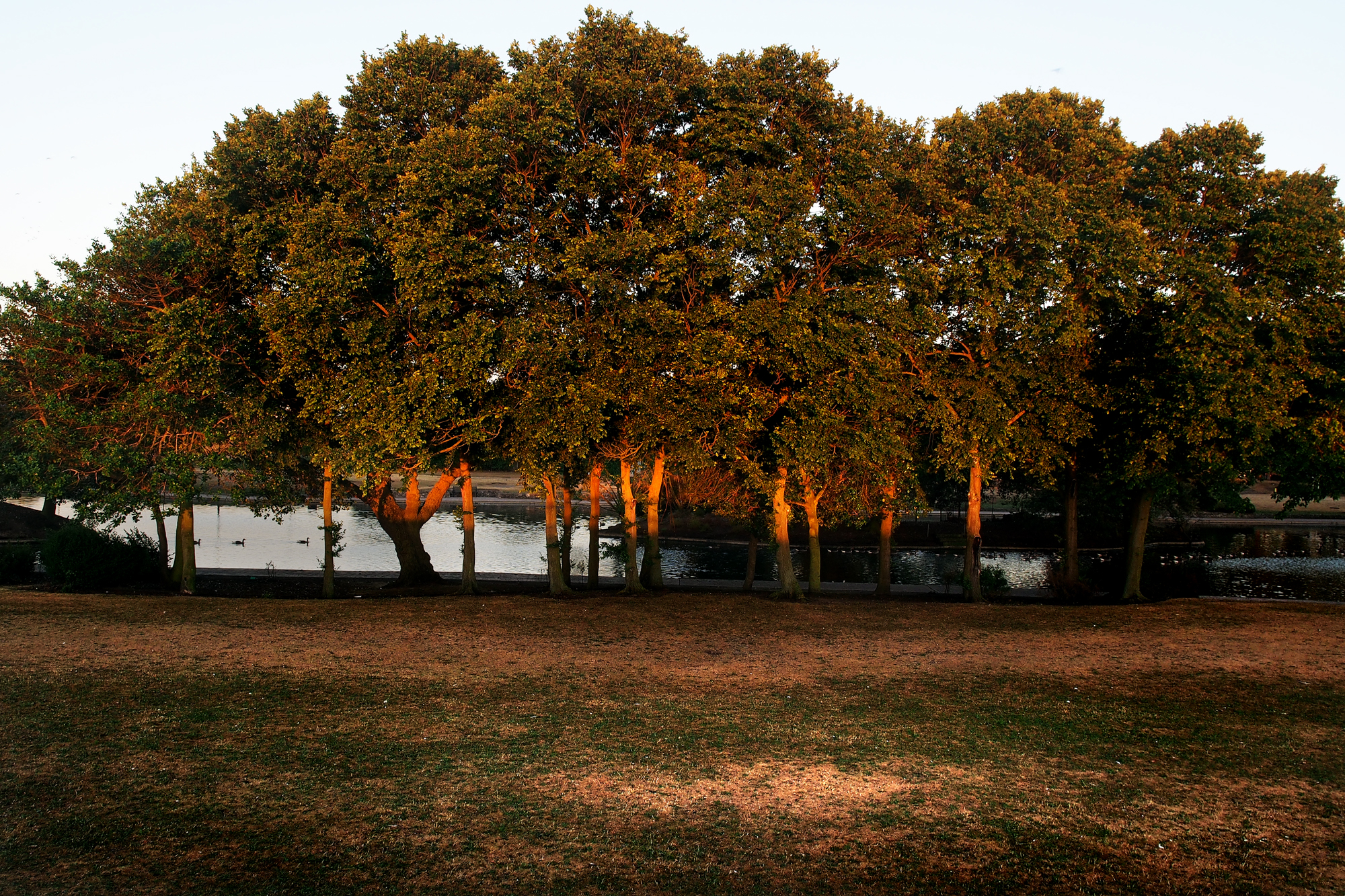
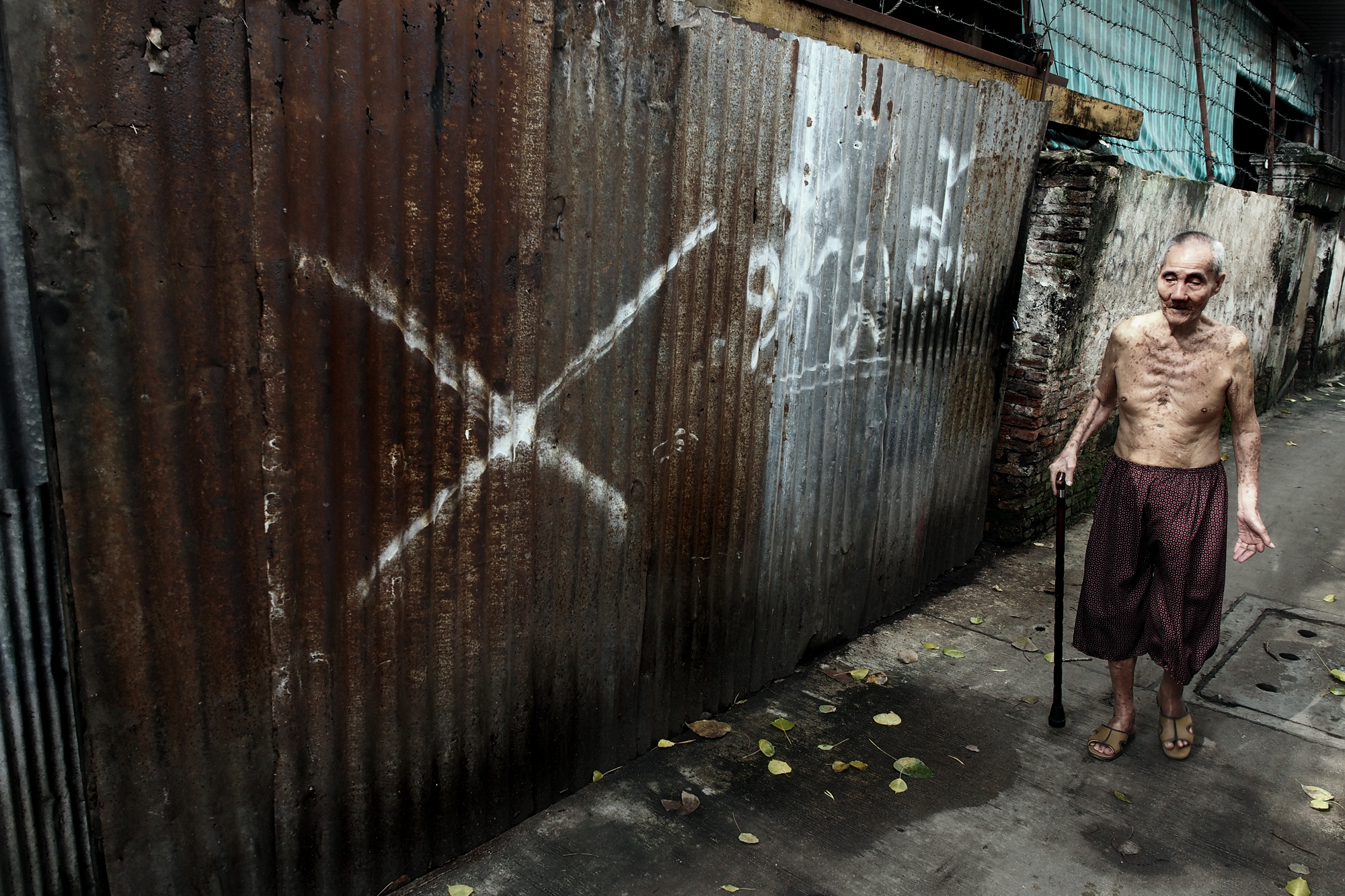
My most familiar 400 metres: A personal street challenge

Day one: Home Guard

It has been just too hot to be out and about lately. And there is only so much scanning of old negatives I can take before the novelty wears off. I needed to be out but I also needed a retreat to the comfort of fans and air-conditioning. I decided to spend some time on my street. Three days, in fact.

Day Three: New build, unoccupied and new build, occupied

My street is quiet. I walk it many times: 300 metres from my house takes me to the point I turn off when taking my daughter to school, 100 metres in the opposite direction takes me to the other end of the street where it joins a busy road. I have walked the street many times as part of my daily routine over the past ten years. I know that there is a solitary pineapple plant on a spot of wasteland and some gorgeously colourful cockerels that peck along the roadside.

Day One: Can he fix it? Yes, he can

I have also noticed recently three new builds. Above are photographs of two of them, the third:

Day One: All will be revealed, but not yet

There is also a house I had never previously taken much notice of that has just undergone a facelift; the choice of colour makes it a stand out attraction now…

Day Two: Yellow house, early morning

Despite the lack of the presence of human activity in the street, there is plenty of evidence of it. I never actually saw painters in action at the house pictured above, but their pots, brushes, rollers and ladders bore testament to their handiwork. I never saw builders as I was taking photographs, but the building progresses daily. It’s almost as if there is a secret world, conspiring to starve me of its portrayal.

Day Two: At the crossroads

The cultural evidence in the street is abundant. This hadn’t really occurred to me until I began to look closely, without the need to get to school on time or buy a bottle of milk before the kettle boils. I find the Buddhist ‘Spirit Houses’ fascinating:

Day Two: Spirit House

In desperation, and needing to find some action, I loitered on my street corner. I was having a cigarette – a favourite (but not recommended) ploy when my intent is a candid photograph – and made this shot between drags:

Day Three: The end of the road

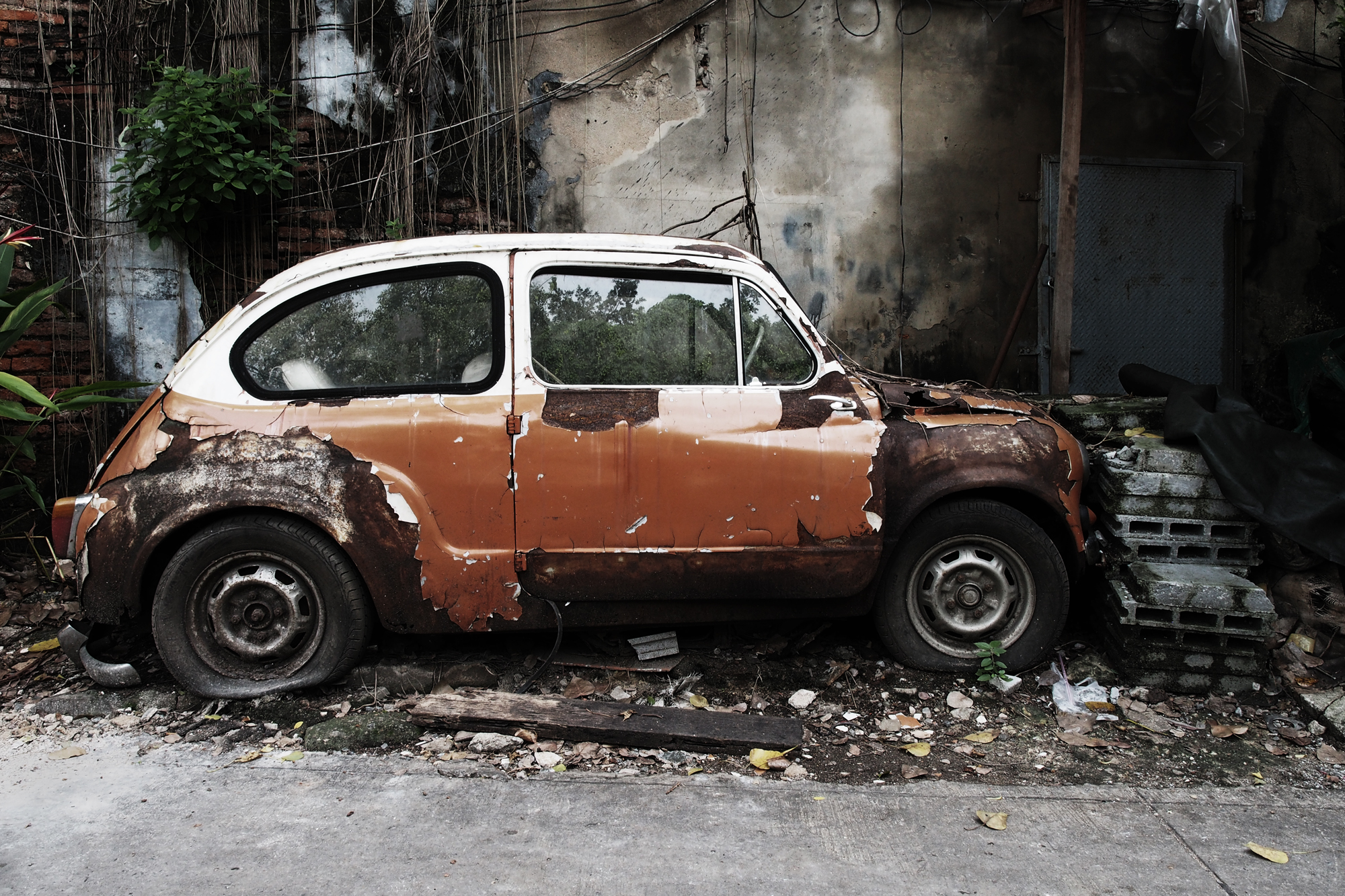
So there you have it. I enjoyed the exercise and was never far away from my front door, water, coffee and fan. I made a photograph of the pineapple plant but didn’t like it. The cockerels ran away at my approach. There was an old car, though:

Day One: Parking space, early morning

Thanks for visiting my blog. All photographs made with an Olympus OMD and a Zuiko short zoom lens.

Shooting dogs for dog’s sake? Merely incidental!

Sakhla, Thailand: 2018

It is difficult to avoid the occasional dog when you spend your time out and about. Here in Thailand dogs are everywhere; in my other stamping ground, Lincolnshire our canine friends are less frequently encountered. When the noted photographer, Elliott Erwitt went through his huge collection of snaps (his term) he noticed this too, eventually working the theme in one of the most marvelous books of photographs. Unlike him, my photographs are pictures of dogs rather than pictures with dogs in them. For dogs’ sake if you like…

Louth, Lincolnshire: 2016

I have to admit that I am a ‘cat person’. I can tolerate dogs and have grown to not be intimidated by them during a face to face street encounter. Despite the barking, snarling and threatening behaviour of some dogs – particularly the strays – they will generally allow you to carry on with what you are doing if you ignore them.

Bang Sue, Thailand: 2019

I have, oddly, formed a brief but rewarding relationship with a dog on occasion. I have talked to them even. In the following photograph I put this down to self-preservation; ‘if I’m friendly with you, you be friendly with me…yes?’

Ayutthaya, Thailand: 2016
Suphanburi, Thailand: 2018

There are cute dogs:

Lincoln, UK: 2014

…and there are not so cute dogs (my opinion only, lol):

Grimsby, Lincolnshire: 2017

Of course the fact of the matter is that life, for all living things, is finite. I felt a moment of sadness for this late dog, thrown up by the waves. The rockabilly classic, ‘Endless Sleep’ by Jody Reynolds occurred to me….

Petchaburi Province, Thailand: 2019

My final offering is my favourite and is another dog I talked to. I felt he needed a friendly word and I believe he enjoyed the company, if only for the briefest time:

Petchaburi Province, Thailand: 2017

Thanks for visiting my blog. The camera I used for these photographs is the usual Olympus with a Zuiko lens.

Old School: Contact sheets and a lesson learned too late…

Contact sheet: Badminton Horse Trials, 1980

As a photography student in the seventies I learned to make contact sheets; negatives sandwiched between glass and photographic paper in a frame purpose-built for the job. In the years following I continued the habit, though I used a heavy piece of glass instead of a frame. The above is an example. Scrutinizing these ‘proofs’ with a magnifying glass in one hand and a china-graph pencil in the other was a satisfying occupation, even better if you discovered you had a half decent photograph to work on. In the case of the above it appears that I found one – outlined in red – and which portrayed Princess Anne with her then husband, Captain Mark Phillips. I happened to pass them whilst strolling through the park.

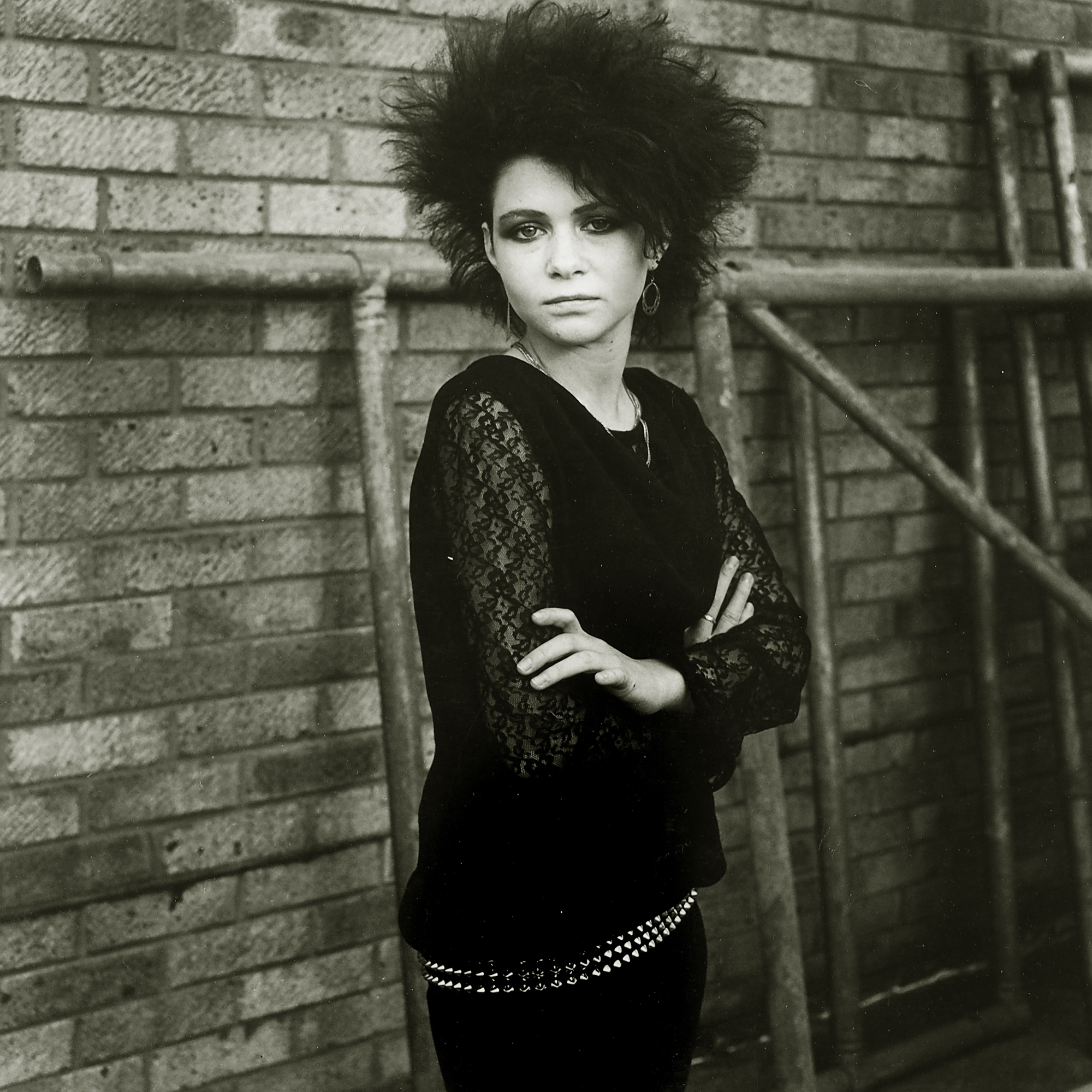
Kay: Scunthorpe, 1984

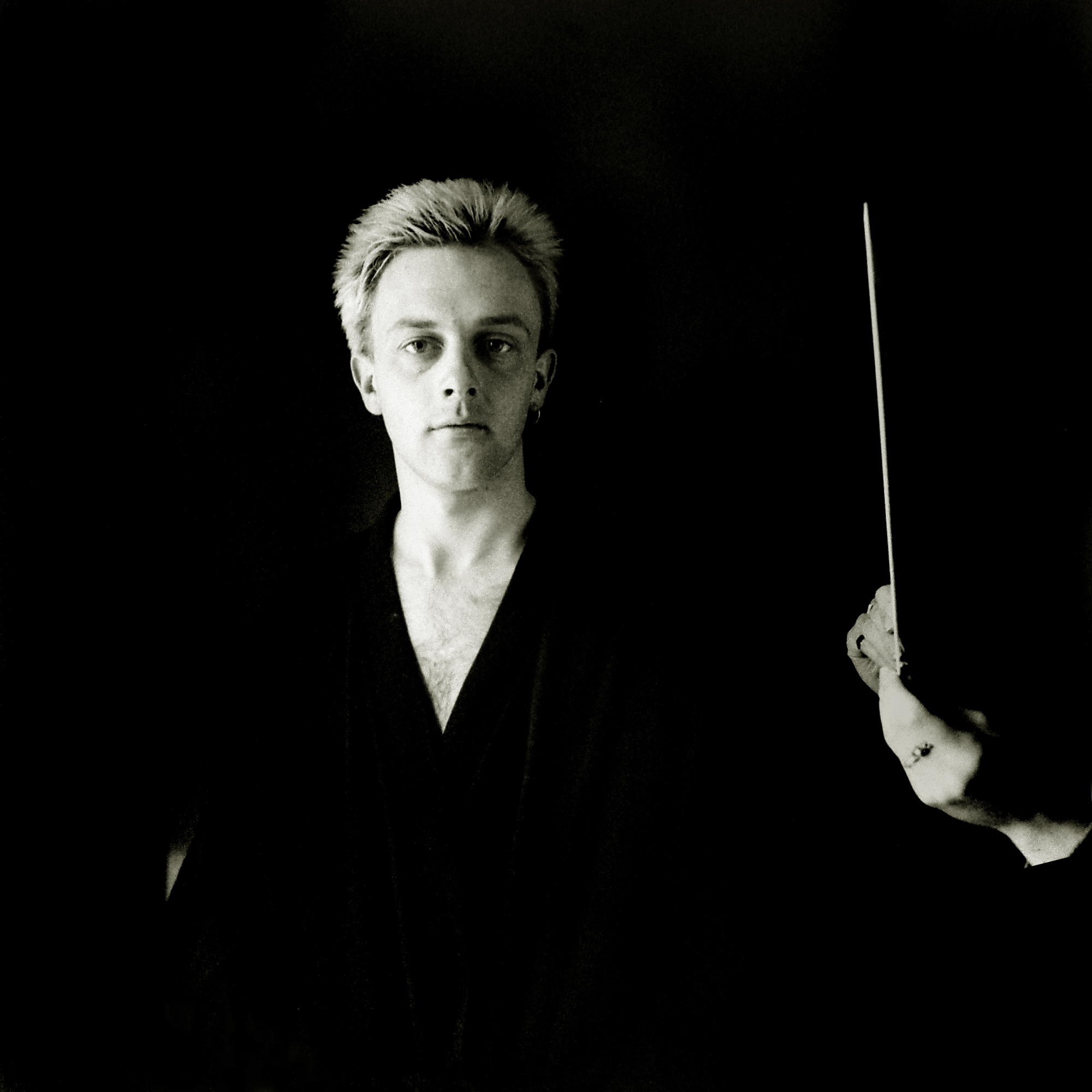
In my defence, I never made contact sheets of the many rolls of film I used for a portrait project I undertook late 1984, early 1985 because I couldn’t afford to. The project, which was intended to reflect youth culture in Scunthorpe – an industrial town in the north of England – was done using a borrowed camera. Any money I had went on buying film and ensuring that final prints were made on paper with a heavy silver content, Ilford Galleria. These final selections were made by reading the negatives as best I could; the 6cm x 6cm format I opted for made this relatively easy. But then…

Kay, 1984: ‘Contact’ sheet, produced 2017 using a light tablet

I thought I’d lost the negatives for this project. Many moves to distant places meant that a lot of my stuff had been consigned to various lofts and garages. When they turned up in 2016 – my brother was renovating his garage – I was really pleased; that they were all in perfect condition was a lucky break (mice had once nested in the box and had damaged some of the other negatives stored in there).

Kay: Scunthorpe, 1984

Three years ago I set about making proofs of all the negatives using a light tablet; I laid them over the flicker-free surface and photographed them from above with my digital camera. On seeing the results I discovered that I may well have made alternative choices for my prints (I had a modest exhibition in the local art gallery in 1985); I also discovered that subjects I left out of the final selection may have made it after all. Above is an alternative shot of Kay which I prefer to the one I chose. The same goes for Paul, below: (original choice, contact sheets and revised selection)

Paul: Scunthorpe, 1984
Paul: Contact sheet, produced 2017
Paul: Scunthorpe, 1984

On a few occasions I found that my original choice was, for me, the correct one. This is Lisa:

Lisa: Scunthorpe, 1985
Lisa: Contact sheet, produced 2017

All in all, I made around 80 portraits. Thanks for visiting this blog. The camera I borrowed for the project was a Mamiya C330.

O, Porto: a turn of the century memoir. Part two…

Facing the Douro, Porto: 1999

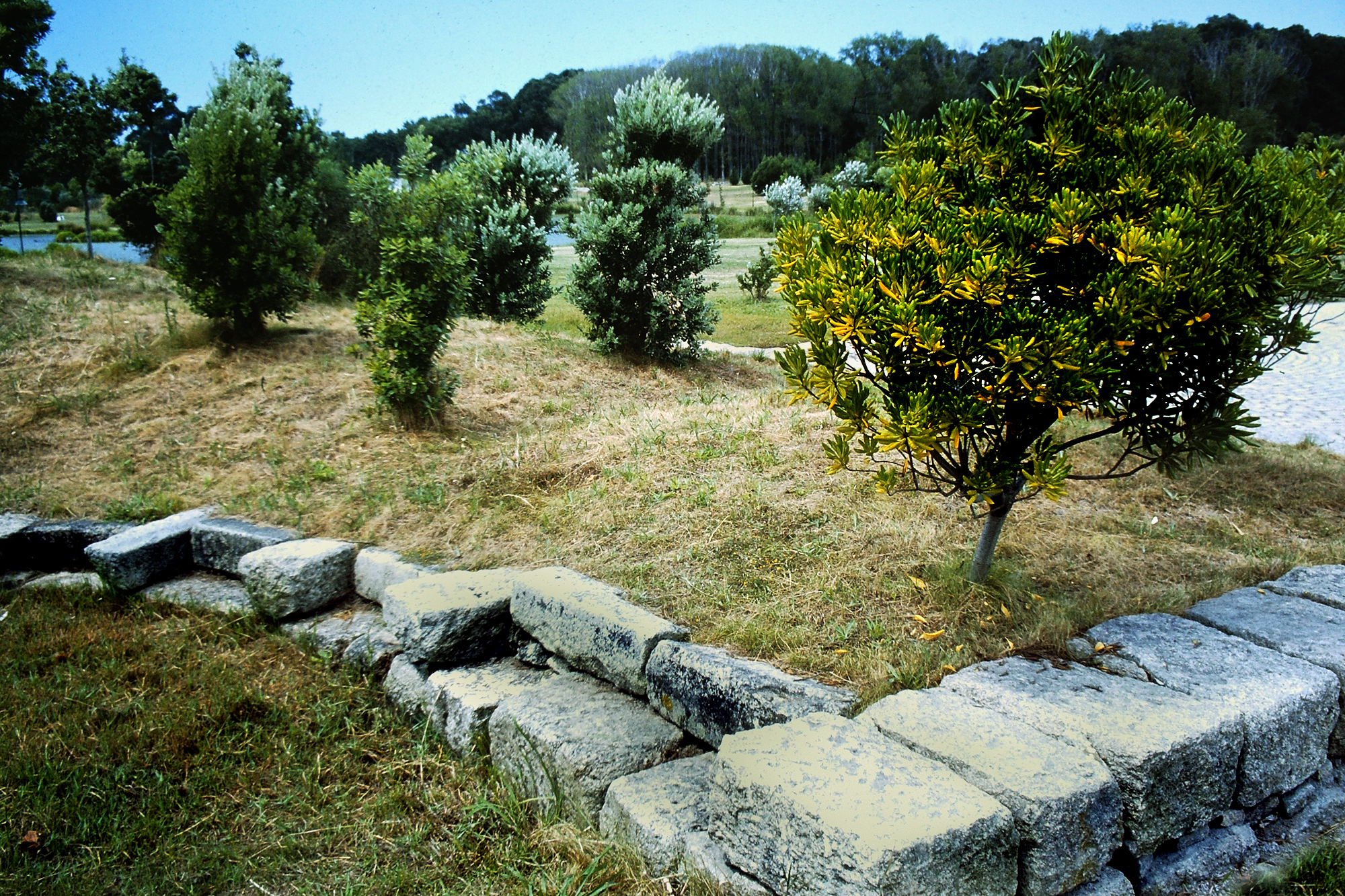
As well as walking around Porto, I’d occasionally venture further afield. You don’t have to travel far to reach the countryside: wooded slopes heavy with the scent of eucalyptus, vast beaches baking in the sun, the small coastal villages with houses of weathered stone, the marvelous churches and quintas – all within easy reach by bus or train.

Ovar: 2000
Ovar: 2000

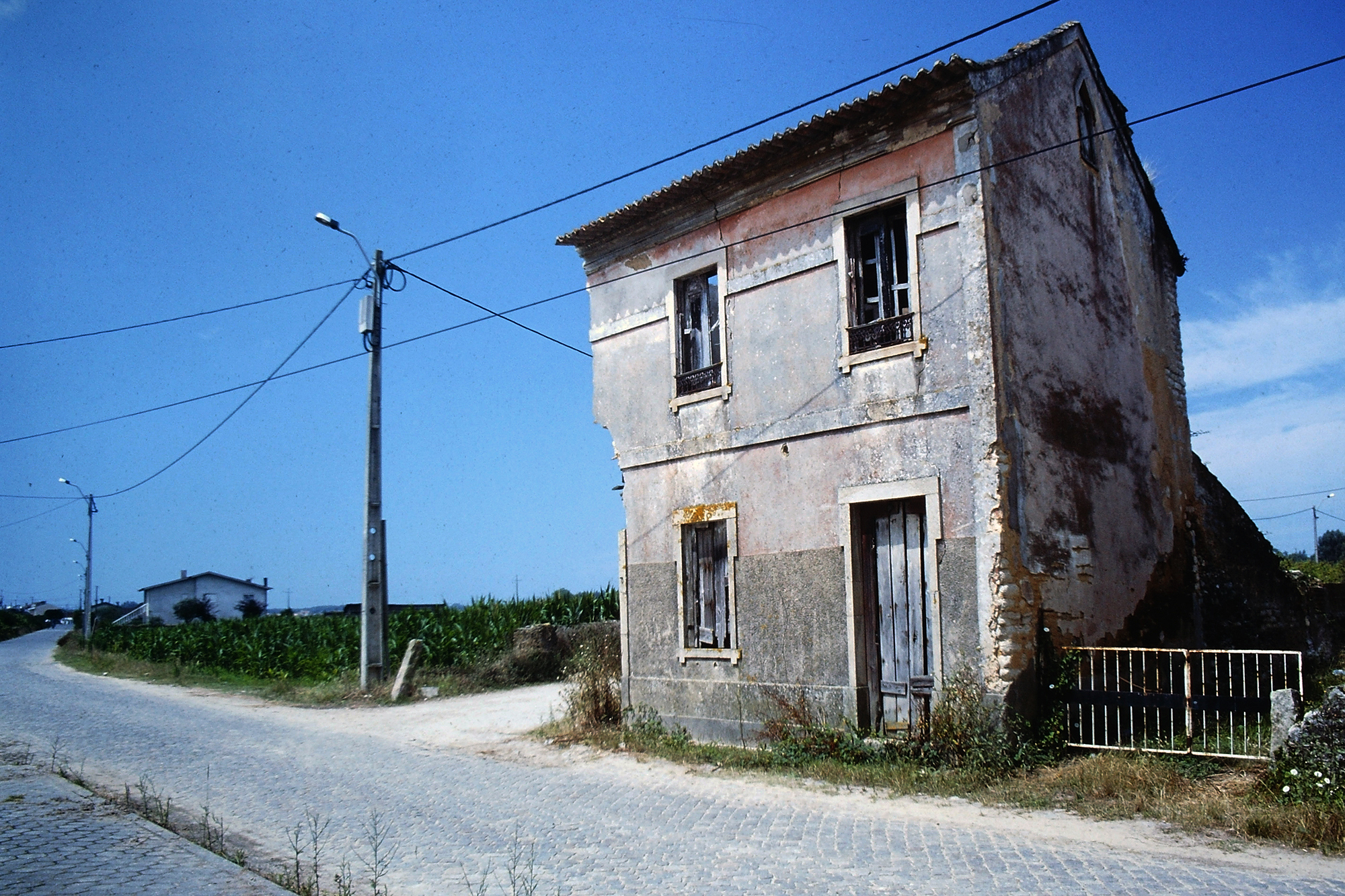
Ovar, around 45 kilometres south of Porto, was a favourite place for a day trip. It struck me as a ‘sleepy’ town (although classed as a city) and I rarely bumped into the locals on my midday strolls (mad dogs and Englishmen). I remember that in the cafes wine was served in earthenware jugs…

Quinta de S Thome, Ovar: 2000

On the coastal railway line, between Porto and Ovar, was the lovely town of Espinho – another regular haunt. A seemingly endless beach were you could watch sardines being caught using tractor-hauled nets. I once tried fishing for bass on a rocky outcrop here; I caught nothing…

Local fishermen, Espinho: 1999

Going north from Porto, along the coast, brings you eventually to the Minho. Walking in the fabulously diverse countryside here was something I didn’t do often enough. I remember one occasion, on January 1st 2000, when I had to hang onto my camera whilst slipping over icy rocks to get this photograph:

New Year’s Day in the Minho: 2000

You cannot walk far in any Portuguese street before you stumble across some beautiful tilework; in particular the hand painted blue and white azulejos:

Leça da Palmeira: 1999
Espinho: 2000

Tiles depicting symbolic icons, scenes from legend and historical story telling are found everywhere, alongside those that are merely decorative. Here are some that caught my attention while exploring the Porto suburbs:

Tile work, Porto: 1999

I hope you have enjoyed my Porto blogs. Thanks for visiting. The photographs, scanned from my original Kodachrome slides, were made using an Olympus OM1 with Zuiko lenses.

O, Porto: a turn of the century memoir. Part one…

Sandeman Port Wine Boats on the River Douro, Porto: 1999

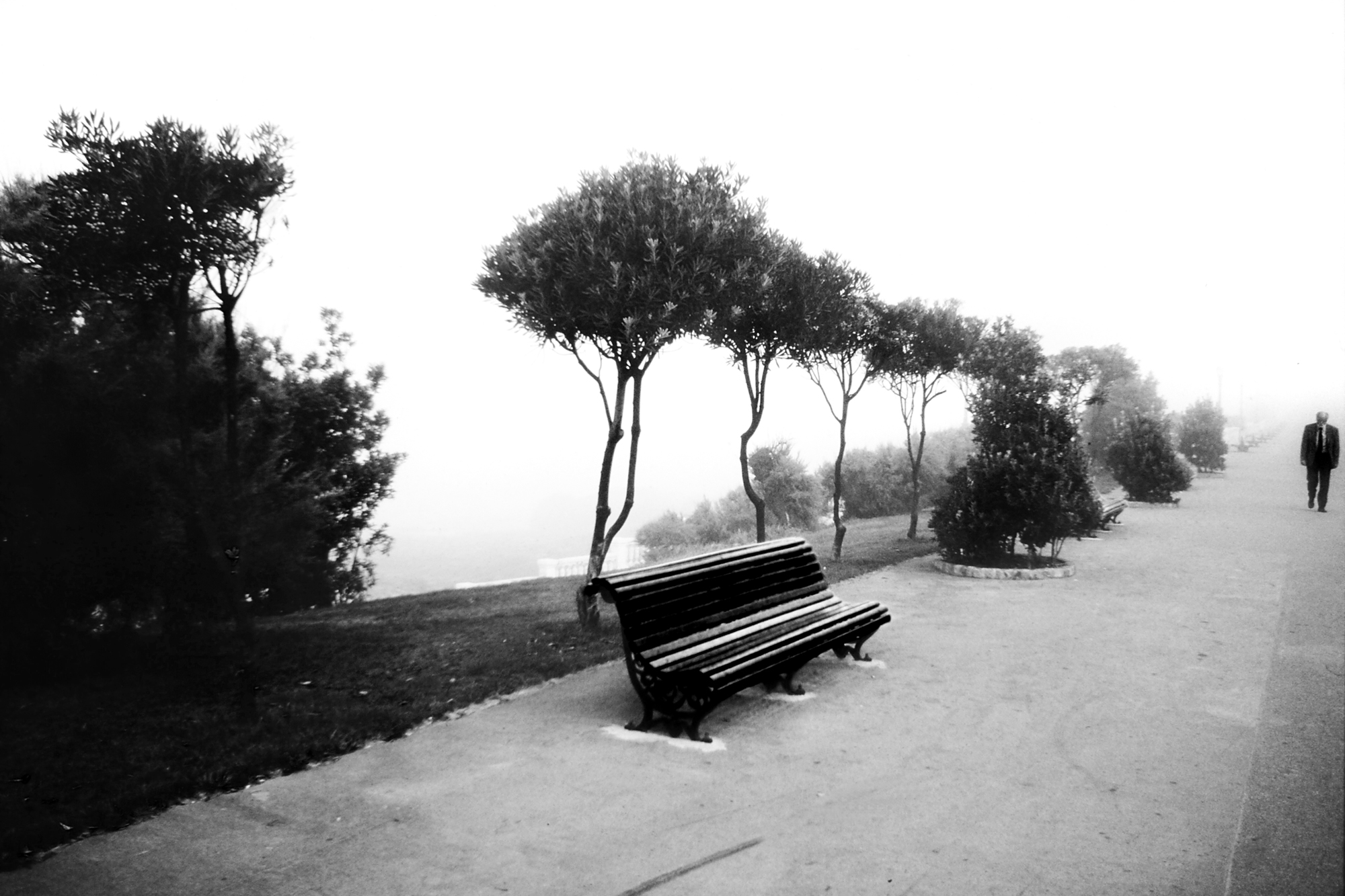
When I saw in the new year, 2000, I was living in Porto. The fireworks overhead reflected on the Douro, close to the Ponte Luis I which can be seen in the background of my photograph above. A river which shares with the city a splendid history and which has been so vital over the centuries to the development of the port wine industry.

Parque da Cidade do Porto: 2000

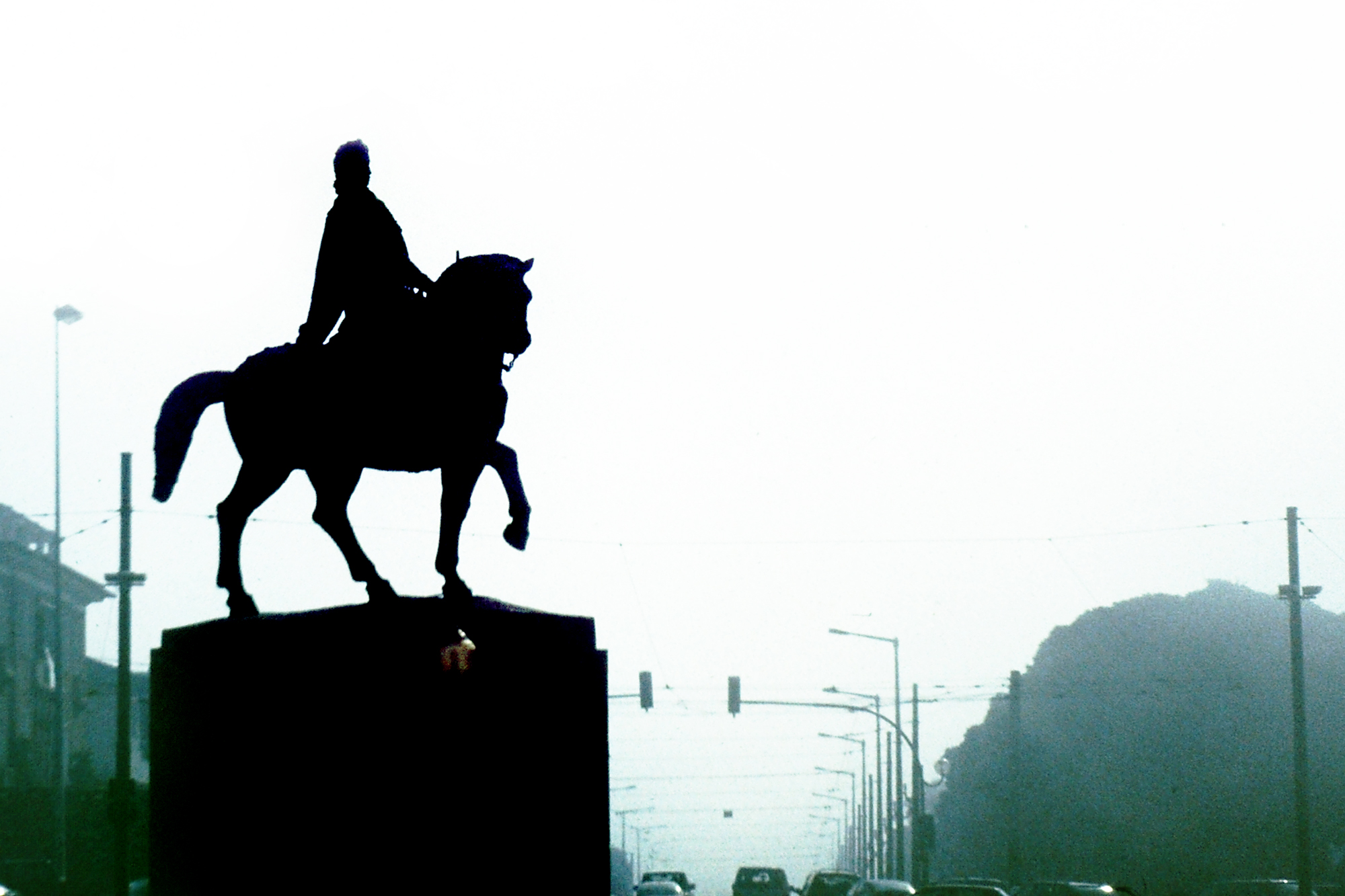
When I first moved to Portugal I lived in Matosinhos which borders the north of Porto, separated by the Parque da Cidade, above. I would often take a short cut through this vast, green space on my exploratory walks, the best way to really discover a city. I would eventually come to the Avenida da Boavista, a broad thoroughfare that ran straight from the seafront to the heart of the city.

Monumento a Dom João VI , at the western end of the Avenida da Boavista: 1999

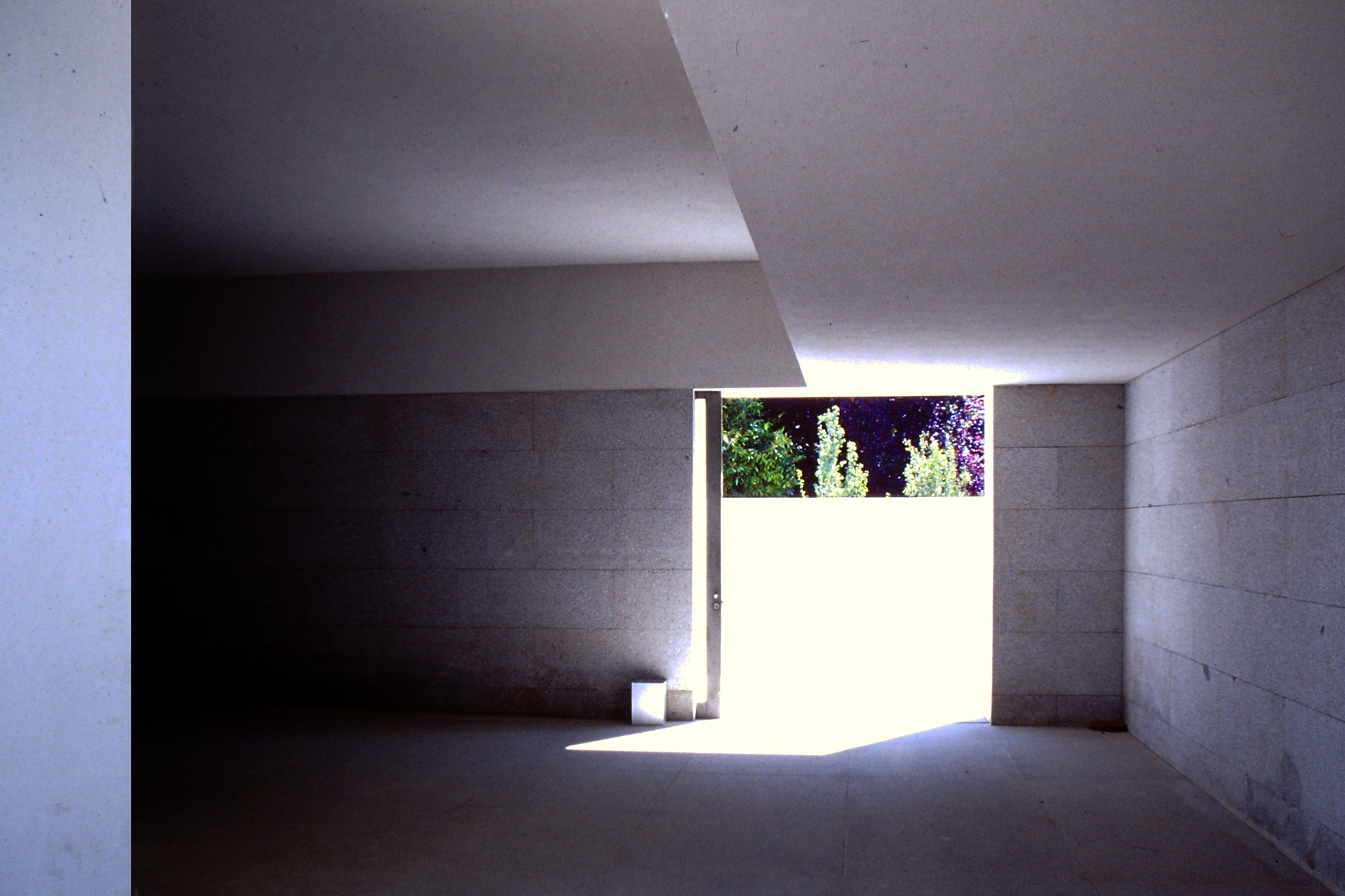
The celebrated Portuguese architect, Álvaro Siza Vieira was born in Matosinhos; half way down the Avenida da Boavista is the Museu Serralves, a superb contemporary art gallery he designed, set in beautiful grounds. This place became one of my favourite haunts.

Museu Serralves, Porto: 2000

I moved from Matoshinhos to Foz do Douro which is situated at the point where river meets sea. One day I came across a statue of the Portuguese writer, Raul Brandão. Born in Foz, his book, ‘Os Pescadores’ was the first Portuguese book I attempted to read (the second was a book on Portuguese cuisine, but that’s another story).

Foz do Douro, Porto: 2000
Rua Nova Da Alfândega, Porto: 2000

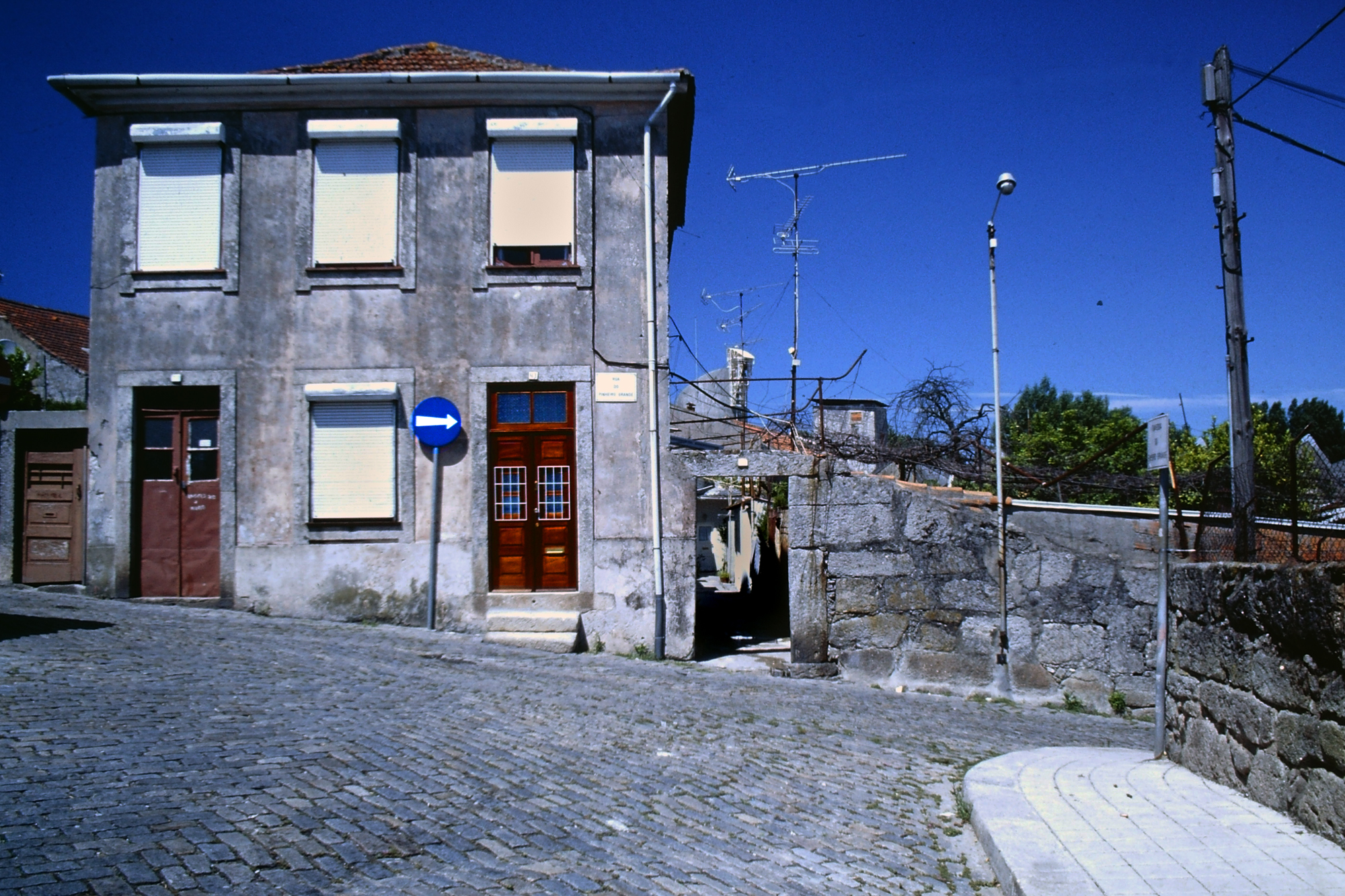
As I said, walking is a grand way to explore a city; combined with local buses (which I would board simply because I was attracted to the name of the destination) I broadened my horizons, ending up in attractive, quiet suburbs with interesting names. São Roque was one of them:

São Roque, Porto: 2000

Fontainhas, which sits on the steep bank of the river behind the Luis I bridge, is another area that fascinated me. A place where every building had an individual character and where the steep lanes offered a challenge of endurance, particularly on a hot day.

Fontainhas, Porto: 2000

There are many things I liked about Porto: the citizens, the history, the bricks and mortar, the cafes, the river and the sea. But the one thing I really miss is the food. All of it. I found many fantastic eateries in out of the way places, restaurants hugely popular with the locals, always full and satisfying in every way. Here is a spot I found in Senhora da Hora. Cabrito Assado No Forno on a Sunday. Beautiful……

Senhora da Hora, Porto: 2000

Thanks for visiting; part two is on the way. The photographs were taken on an Olympus OM1, with Zuiko lenses. I scanned my original Kodachrome slides as best I could…..

‘Oh, I do like to be beside the seaside’: part two….

Ice Cream, 2016

Continuing my home town blog and a thought or two about childhood. One thing that struck me last summer (odd that it never really struck me on any of my other annual visits) was how much the place has changed over the years. Growing up in Cleethorpes, Lincolnshire during the sixties was fab. Particularly out of season when my pals and I seemed to have the place to ourselves. The season had its attractions too, watching the mods and rockers on the promenade, beatniks up for the jazz festival, dads (handkerchiefs on heads) snoozing in deckchairs: days when an ice cream was the treat it doesn’t seem to be nowadays.

Moonbeams on Tour, 2018

Many of the wide open spaces of my youth have succumbed to the sprawl of urbanisation; places we would fish for newts and sticklebacks, country paths winding through fields of barley and potatoes, small woodlands that seemed infinite and slightly dangerous to a small person. Pockets survive and I am always pleasantly surprised when I come across them.

Town Limits, Cleethorpes, 2018
Boating Lake, Early Morning, 2018

As I mentioned in part one of this blog, early mornings are a favourite time for my photographic expeditions. Aside from the odd dog walker or jogger, I have the place to myself. Looking for evidence, sometimes finding it….

Construction made by surfers, 2018
Holiday Homes, 2017

Attractions look neat and tidy, too. There was a seafood bar in exactly this place when I was a lad; my dad offered me a whelk to try once – never again:

Daisy’s Seafood Bar, 2016

Some, not quite so perfect:

Seafront Pub, 2017

I’ll end it here. This summer will be my final holiday in my home town as the following summer my family and I are expecting to relocate there. Back to my roots after many travels. I’ll sign off with a photograph I made last July – I wanted a different view of the Red Arrows (the RAF display team) – and chose a place not changed much. A boy hurried past and it occurred to me that, 55 years ago, it might have been me – homeward bound and slightly late for tea – in his place.

Homeward, 2018

As usual, hats off to my trusty Olympus OMD camera….

‘Oh, I do like to be beside the seaside’: part one….

View from the pier at Cleethorpes, 2017

Cleethorpes is a seaside resort in Lincolnshire, UK. It sits on the mouth of the Humber estuary, not far from where river meets sea, and it is the place of my birth. I visit the place every summer for a month or so, my family and I plan to resettle there next year.

Generally, as with anywhere I find myself, I like to be up and about before the sun. Watching the scene unfold, empty yet populated with the evidence of activity. Such was the shot above as I looked over from an empty pier I noted how a sluggish tide had so neatly smoothed away the marks of an earlier activity and how it had jettisoned a single piece of driftwood.

‘The Front’: Cleethorpes early morning, 2018
Traditional Postcard Art as Mural, 2017

During the summer days, people come to the seaside for much the same reasons as they have done historically; to take the sea air, to have fun, eat candy floss and whipped ices or to simply relax….

Cleethorpes, 2018
Promenade, 2016

It is fair to say I never tire of the place. I’ve watched it change over the 60-odd years and it has seen me grow up too.

I’m Lovin’ It ? 2017

Despite the emergence of fast food outlets (dim view taken by me, for sure), you can still feast on the most excellent fish and chips – best in the country – and, as the son of an ex-trawlerman, I know it.

Syrup and Cream, 2017

At the end of the day – literally – there is nothing better than leaning over the promenade railings and feeling the sting of that fresh breeze on your face!

Thanks for visiting, as usual an Olympus OMD was used with Zuiko short zoom.

Evening on the ‘prom’. 2016

Talat Noi: the project that was, then wasn’t, then was…

Talat Noi, Bangkok: 2017

Talat Noi is a riverside neighbourhood that sits on the fringes of Bangkok’s Chinatown. I was instantly attracted to it when I made a brief visit in 2017; looking for a project that would be my first in colour – after 40-odd years of monochrome photography – I vowed to return and get cracking. That decision was to cause me a few headaches along the way.

Talat Noi, Bangkok: 2017

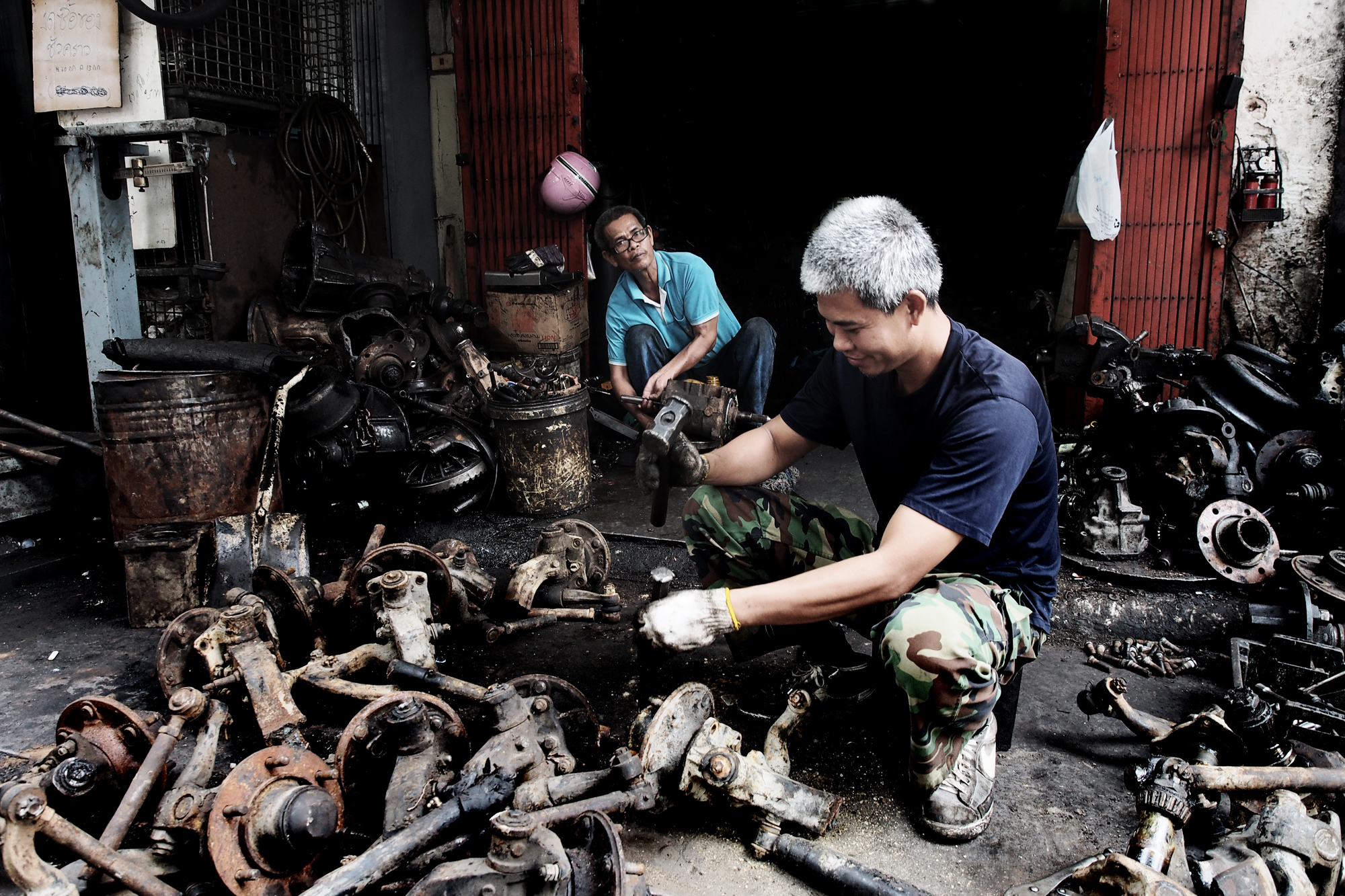
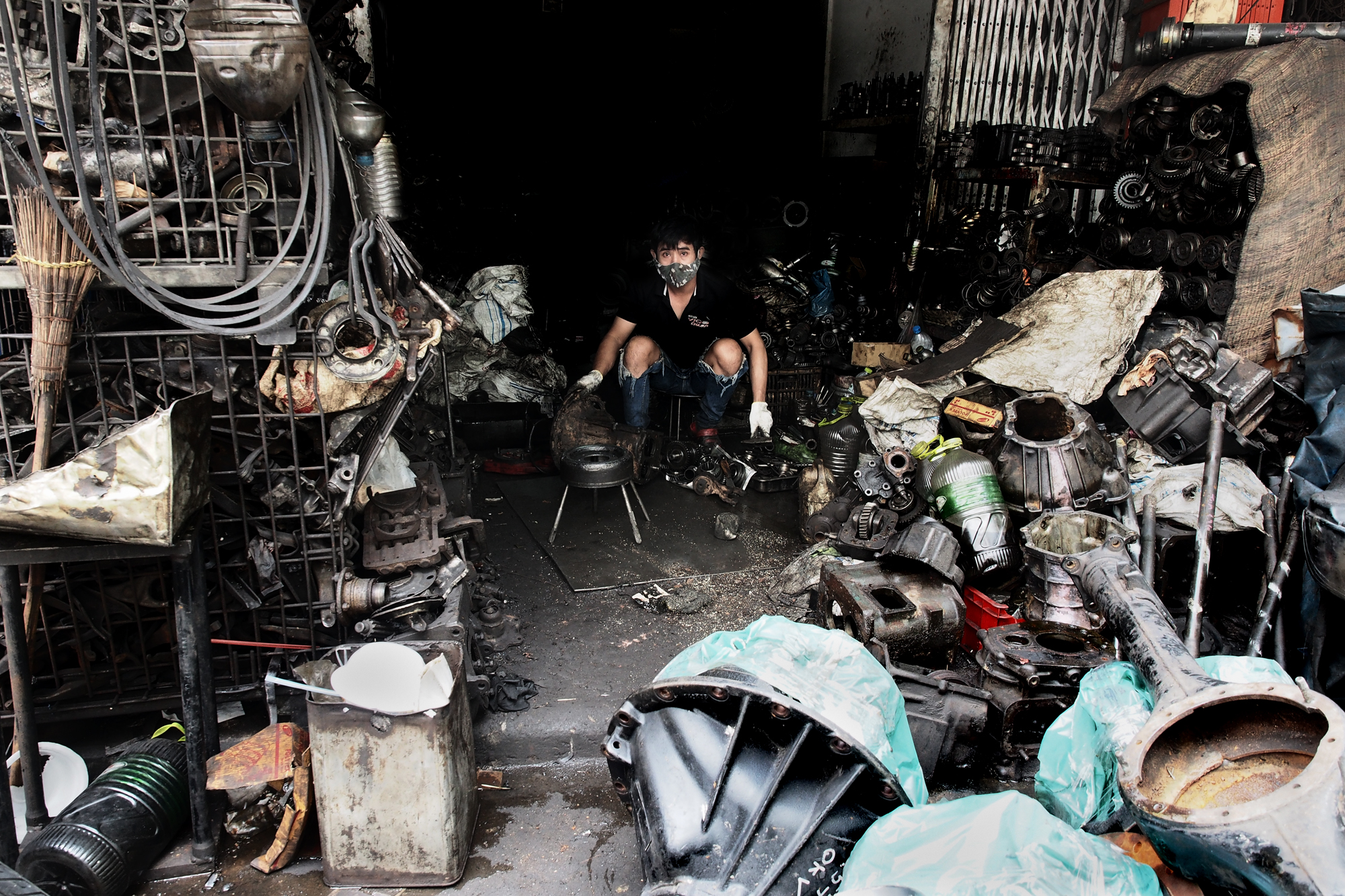
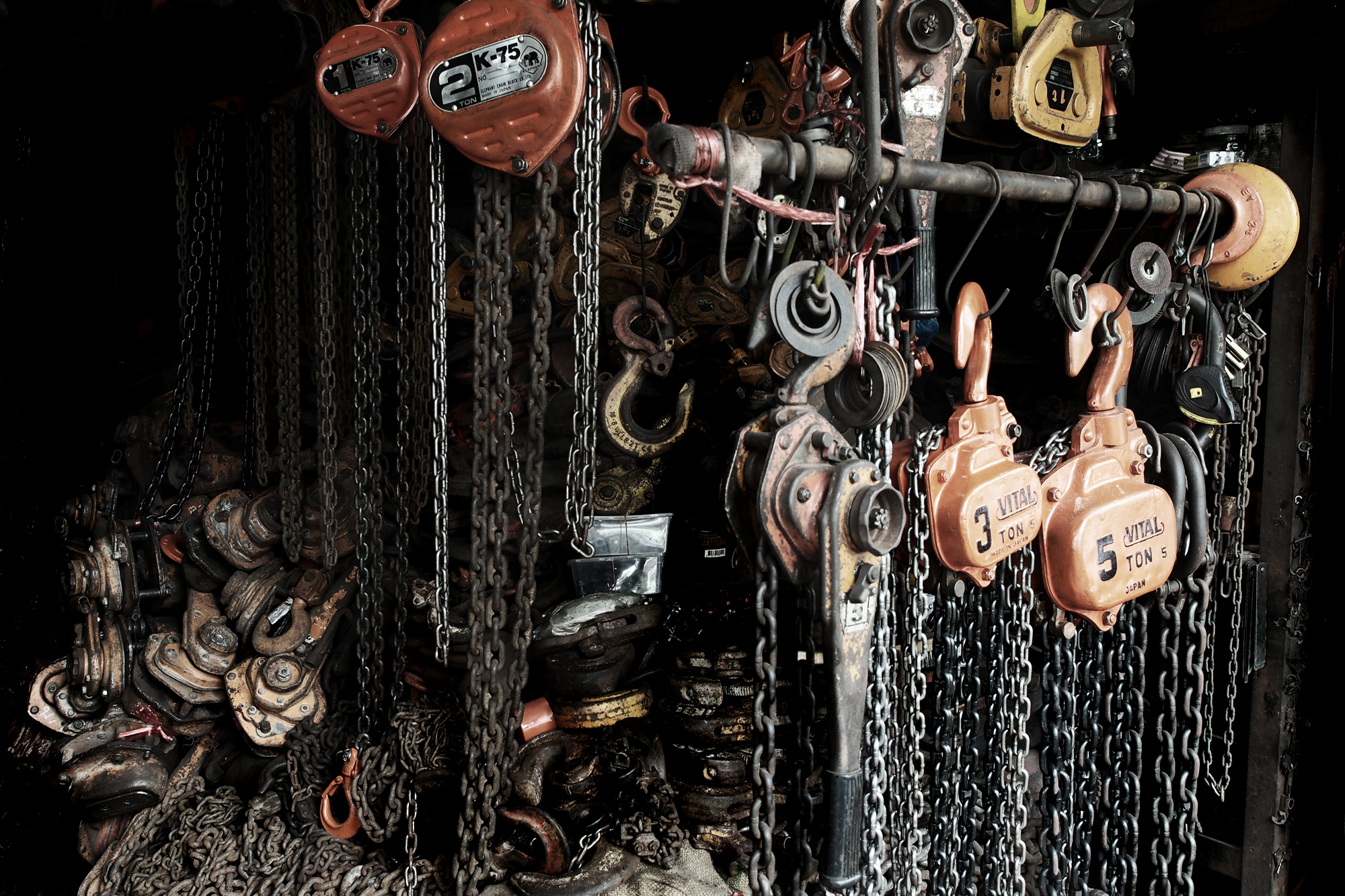
Talat Noi is a collection of streets with one thing in common: salvaged engine parts, millions of them. Great piles of cogs, cylinder heads, axle boxes – all manner of parts. Dirty, oily streets where each workshop is a hive of activity and, I presume, business is done. I wanted my colour photographs to reflect the grime, the ‘unprettiness’ of it all.

Talat Noi, Bangkok: 2017

I devised a technique using layers in Photoshop; a base layer of a very contrasty monochrome version of the photograph over which I placed the original colour photograph which I then reduced in transparency until the effect of the base layer played apart. I liked the desaturating effect of this on the colour.

Talat Noi, Bangkok: 2017

Then I realised that I was just trying to get back to my mono comfort zone; my choice of subject was made, not for the colour, but with monochrome in mind. I had long hard look at this; then went back and shot monochrome.

Talat Noi, Bangkok: 2018

On the whole, it was an unproductive day and very hot. Some of the photographs showed context while some, like the above, did not. But I was getting some interesting (for me) stuff.

Talat Noi, Bangkok: 2018

Plenty of food vendors about in the community. I had a go at shooting colour and not messing about with it:

Talat Noi, Bangkok: 2018

I’ve visited Talat Noi half a dozen times and, after trying various techniques, have decided to give it a rest. I’ve really enjoyed my strolls around this fascinating area and am convinced there is the photograph. Just got to find it. As for the car, on my last trip a month or so ago it was still there and still attracting attention:

Talat Noi, Bangkok: 2019

Thanks for taking the time to visit my blog. All photographs were taken on my OMD EM5 coupled with a Zuiko Digital short zoom lens.

Photography Essentials: Decent Shoes…

The Sea Bank near Boston, UK: 2016

By the time I reached my lodgings – a ten minute walk from the bus station – my left foot was very sore. I was in Boston, Lincolnshire and my intention was to make a series of long walks around the surrounding country side, to see what I could see (the photograph above was made during a 13 mile hike the following day). I’d hit a problem before I had even started. I stepped out into the market place and found some excellent and comfortable walking footwear in a sale. Consigning my old shoes to a skip I returned to my room and unpacked my OS maps….

Evacuation Point or ‘This Must be my Portaloo’: Fishtoft, Lincolnshire 2016

The shoes were a success, comfortable as slippers, durable enough for the variety of terrain encountered by the keen walker. Although most of my photography takes place in urban areas, I really enjoy strolling along the byways and footpaths of the UK, particularly those of my home county, Lincolnshire. Photographs may not come often – the two above are all I have to show after a six hour expedition – but how exhilarating to reach the Wash, with a big sky above, and look out over the marsh to the water, recalling my days on the cockle and mussel boats in the late 1970s.
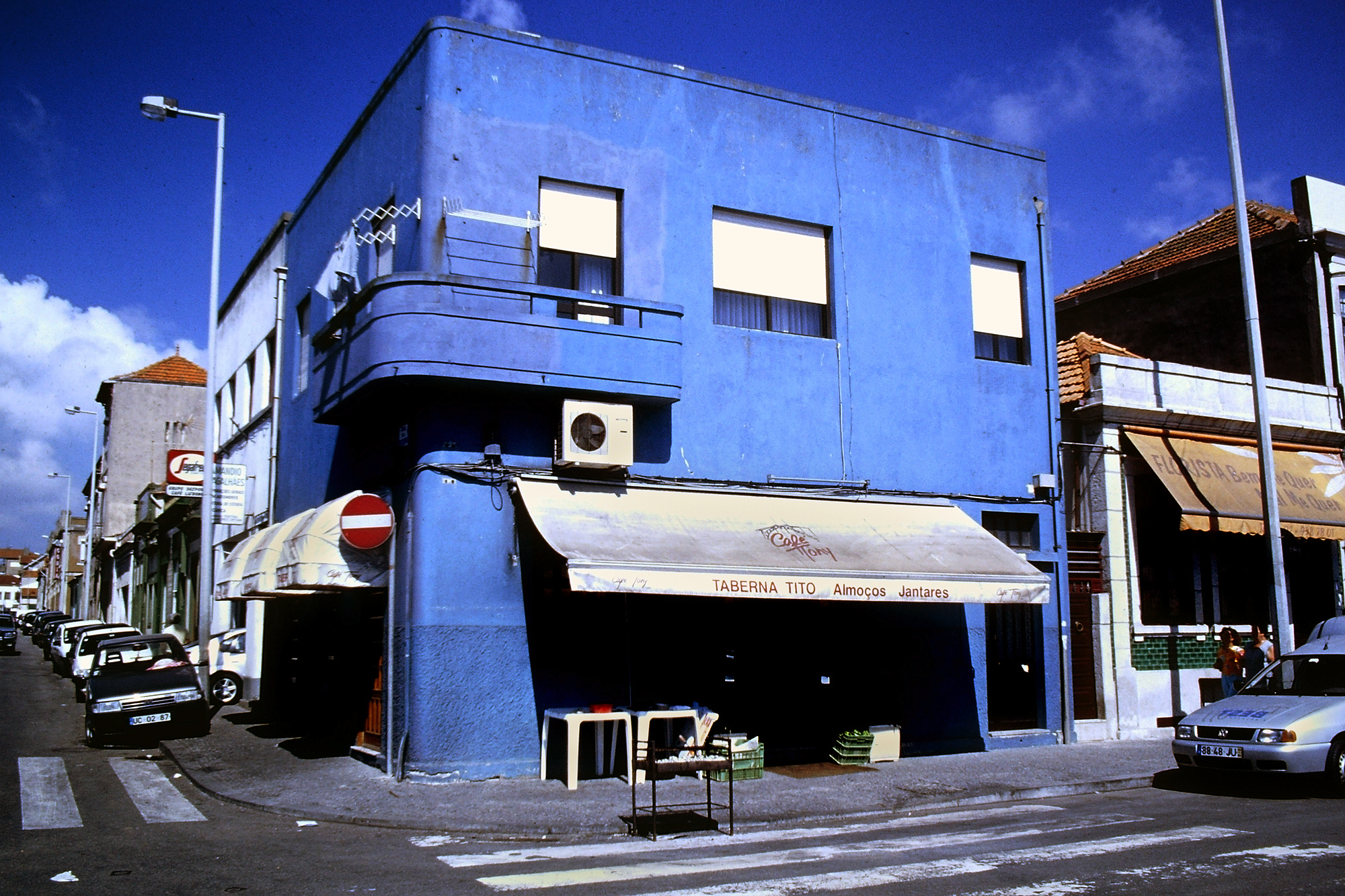
Never did find the roadworks: between Fulstow and Tetney, Lincolnshire 2017

Seats are always a welcome find, particularly those provided as a rest stop….

Sutton-on-Sea, Lincolnshire: 2016

Sometimes unwanted and discarded, as in the next photograph, in the seeming ‘middle of nowhere’….

Between Ludborough and Fulstow, Lincolnshire: 2017

Pubs can be a welcome sight, particularly during opening hours (this one was closed for renovation)….

The Wallace Arms, Northumbria: 2016

Another novelty was the discovery of a fish and chip shop set back from a very quiet little country road out in the sticks….it was closed. I later learned that it had an excellent reputation and that people would travel from miles around for the food…

Top Nosh, near Yarburgh, Lincolnshire: 2017

I love the sense of stillness that you get when you stop somewhere along some remote footpath, away from the hustle and bustle of towns and cities, and just for a minute soak in the view…

Dragonby, Lincolnshire: 2018

And if anyone needs a couple of car seats, I know where you might find some, lol:

Somewhere between Burringham and East Butterwick, Lincolnshire: 2018

Thanks for taking a look at my blog. Now, where did I leave those shoes?

First steps on ‘the road to who knows where?’

Student work: 1973 – 1977

Park Lane, London 1976

Aged 18, I had an idea to become a fine artist. With that in mind I enrolled on an art foundation course in London, E17. All art disciplines were covered over a year; one of these was photography. For the first time in my life I had a ‘proper’ camera in my hand along with a couple of rolls of film which I would develop myself.

Haringey, North London 1973

The photograph above shows the children of two families I shared a house with and is on the second roll of film I ever exposed. The first was full of very unremarkable shots; I had chosen the old Covent Garden market as a subject – getting there towards midnight and staying until breakfast – and the tricky lighting, mainly bare fluorescent tubes, was too much for this novice. But I really enjoyed the experience of being there and, despite getting no decent photographs, I was hooked. At the end of the year I applied to undertake a full time course in photography.

Teddy Boy, Derby 1976

The course was split: I did my first year in Nottingham and my remaining two years in Derby. Though I perhaps didn’t know it at the time, the influence that the course had on shaping my outlook (and inlook, if there is such a thing) was immense. In fact, I still haven’t managed to shake it off to this day.

My Grandfather 1975
Derby 1976

The first book of photographs that really grabbed my attention as a student was ‘A Day Off: An English Journal’ by Tony Ray Jones (1941-1972). It included photographs made at seaside resorts (interesting to me as I was from a seaside resort); over the next couple of years I made several trips to the coast in search of my own seaside. I’m still looking.

Brighton 1976
Brighton 1976
Wells-Next-The-Sea 1976

Looking back at these photographs, it is interesting to me that my style has not really changed over the years. I find that reassuring.

Teddy Boy Dancing, Horncastle 1976
TV Smith, Lincoln 1977

I hope you’ve enjoyed this small collection of photographs. I’ll leave you with another seaside shot. As for gear, probably Nikon Nikkormat – I didn’t get my own camera until after college – with various Nikon lenses….

Whitley Bay, 1976