
As well as walking around Porto, I’d occasionally venture further afield. You don’t have to travel far to reach the countryside: wooded slopes heavy with the scent of eucalyptus, vast beaches baking in the sun, the small coastal villages with houses of weathered stone, the marvelous churches and quintas – all within easy reach by bus or train.
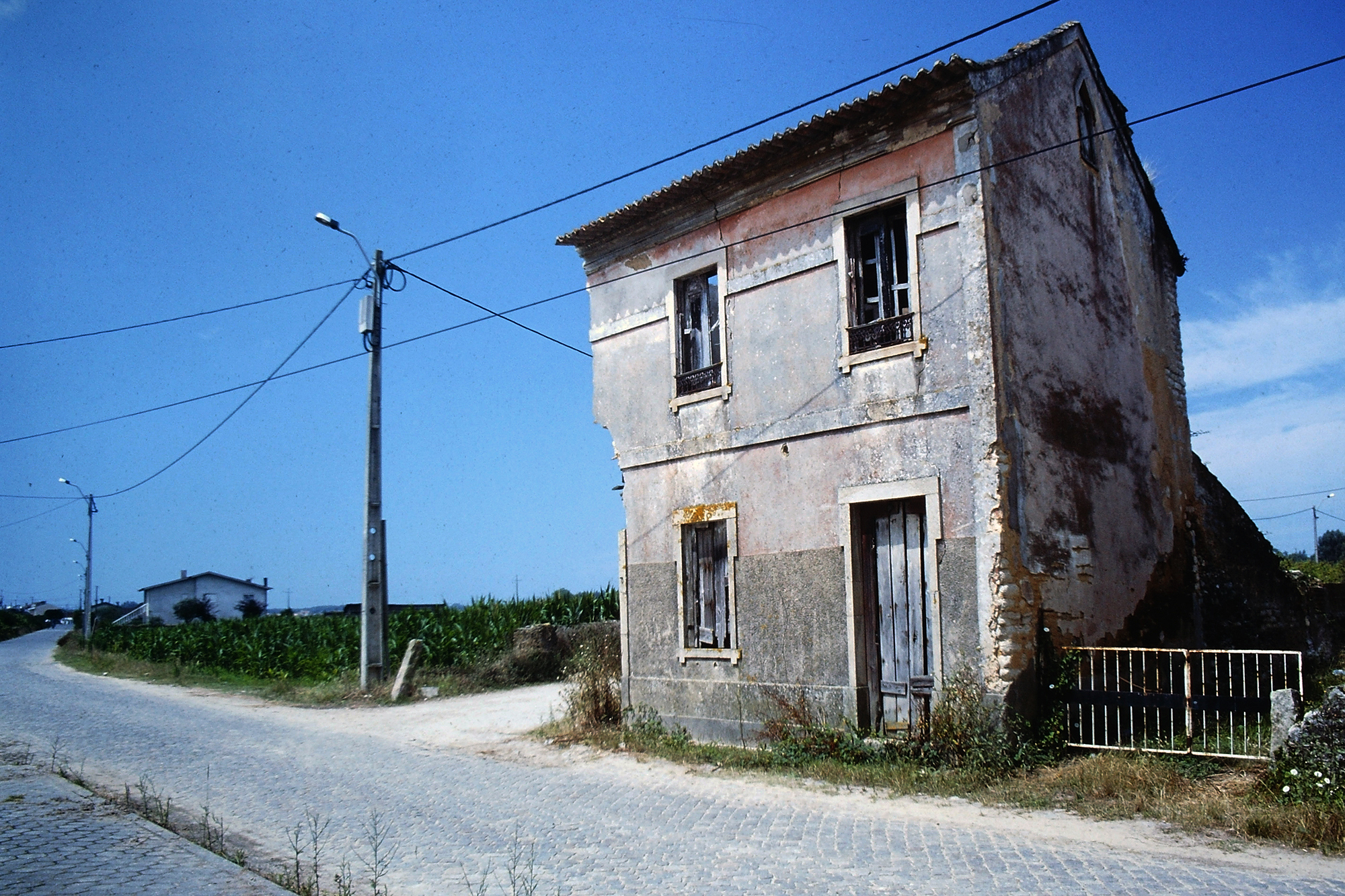

Ovar, around 45 kilometres south of Porto, was a favourite place for a day trip. It struck me as a ‘sleepy’ town (although classed as a city) and I rarely bumped into the locals on my midday strolls (mad dogs and Englishmen). I remember that in the cafes wine was served in earthenware jugs…

On the coastal railway line, between Porto and Ovar, was the lovely town of Espinho – another regular haunt. A seemingly endless beach were you could watch sardines being caught using tractor-hauled nets. I once tried fishing for bass on a rocky outcrop here; I caught nothing…

Going north from Porto, along the coast, brings you eventually to the Minho. Walking in the fabulously diverse countryside here was something I didn’t do often enough. I remember one occasion, on January 1st 2000, when I had to hang onto my camera whilst slipping over icy rocks to get this photograph:

You cannot walk far in any Portuguese street before you stumble across some beautiful tilework; in particular the hand painted blue and white azulejos:


Tiles depicting symbolic icons, scenes from legend and historical story telling are found everywhere, alongside those that are merely decorative. Here are some that caught my attention while exploring the Porto suburbs:

I hope you have enjoyed my Porto blogs. Thanks for visiting. The photographs, scanned from my original Kodachrome slides, were made using an Olympus OM1 with Zuiko lenses.
 nic salmon's notes in passing