Woskerski and the Wall: Colouring Cleethorpes…

Dawid Paradowski is a London-based artist who was recently selected, along with a number of local artists, to take part in a ‘Paint the Town Proud’ initiative which has seen various artworks appear on walls throughout the Grimsby and Cleethorpes conurbation.

Dave, who signs his work Woskerski, is a versatile artist well known for his food illustration and it is no surprise that the main focus of his new mural is ice cream. Painted in a photorealistic style, the two cones that dominate the composition look mouth-wateringly delicious. The artist can now add the east coast resort, Cleethorpes to a long list of places his work can be found: in London and elsewhere in the UK, in the United States, in Europe and beyond.

Woskerski works with cans of spray paint and the control he has over this medium is incredible: I watched him for a while: he was working on a small detail, layering about six different colours, it was fascinating to watch. The artist estimated he had used around 400 cans of paint over the 16 days it took to complete the mural.

The thing I really liked was the way the various textures of the wall were still very apparent on close scrutiny: smooth concrete rendering, brickwork old and new, missing mortar, cracks. Covering this was a challenge for the artist I guess, but adds a lot of interest for me. The overall result is a beautiful thing and I know that the people of Cleethorpes are very grateful to have it.

Closure: ’35 Years On’ (Part 1 of 6)

When I undertook my ‘street’ portrait in 1984, I never thought I would be tramping the streets of Scunthorpe, Lincolnshire 35 years later, revisiting those I photographed…

Tina, 1984

I found the conversations I had with the people I photographed absolutely fascinating – all had interesting stories to tell – and Tina’s story of her life since 1984 was one of them.
Tina joined the Danish Merchant Navy as a cook and, over a span of 16 years, worked her way up the ladder and finished her maritime career as first mate. She returned to her home town of Scunthorpe where she gained employment as a heavy fork-lift driver and subsequently a gantry crane driver for a firm of steel fabricators.
After 10 years as a child-minder, Tina recently began casual work in a school kitchen, working around her commitments to her two sons and her dogs.

Tina, 2019
Martin, 1984

While I was in Scunthorpe, Martin was taking a holiday with his family following a long tour of the US. He generously drove over to me on his return so I could include him in the project. What had he been up to over the past 35 years? He mailed me this statement:

‘In 1984 I was in a local Scunthorpe band and working at an agricultural supplies establishment. In my spare time, I worked at the Baths Hall (and other venues) for a local PA company as a sound engineer. Chance meetings of people ‘further up the ladder’ in the live concert side of the music industry whilst working at Scunthorpe’s Free Rock Festival gave me the opportunity to begin working nationally and internationally as a sound engineer and tour/production manager. So, I made a ‘career move’ and began living in Leicester and joined a team of like-minded people there. 35 years later, I am back living in a quiet Lincolnshire village and married with 2 children. I’m thankful for an amazing career that has taken me all over the world year after year, working for multi-million (record) selling artists of all kinds. I’ve visited places that in 1984 I would never have dreamed of and experienced life in a way that I never thought possible. My work has introduced me to musicians and comedians, tv and film celebrities, and hundreds of other ‘roadies’ – a lot of whom will remain close friends for the rest of my days. It’s not easy being away from home, family and friends for long periods of time and it’s not a life that suits everyone, but the rewards make it worthwhile and I don’t regret (much of) it at all!’

Martin, 2019
Jill, 1984

Jill is still as enthusiastic about life – always delivered with good humour and accompanied by an infectious smile – as I remember she was back in 1984. Her consuming interest nowadays is centred on ‘Steampunk’, a style of design and fashion that combines historical elements with anachronistic technological features inspired by early science fiction.
Curiously, Jill explained to me that she had once made the headlines of a local newspaper when she ‘stole the Queen’s dog’. The sensational nature of that headline was a little misleading, though the dog she ‘liberated’ from conditions she felt were less than satisfactory was indeed from the same stock as the royal hounds.

Jill, 2019

Hope you enjoyed this first part of my project ’35 Years On’. The 1984 photographs were made using a Mamiya 6×6 camera and Kodak Tri-X film stock. Those taken during my stay in Scunthorpe in July 2019 were made using my OMD EM5 Mk II, coupled with a 12-40mm f2.8 Zuiko Digital lens. My sincere thanks to all who took part. I will leave you with a dedication to two guys who are sadly no longer with us:

Darren ‘Daz’ Lloyd: 1966 – 1997
Steve Empringham: 1964 – 1991

Closure: I need to let the eighties go…

‘Wingnut’

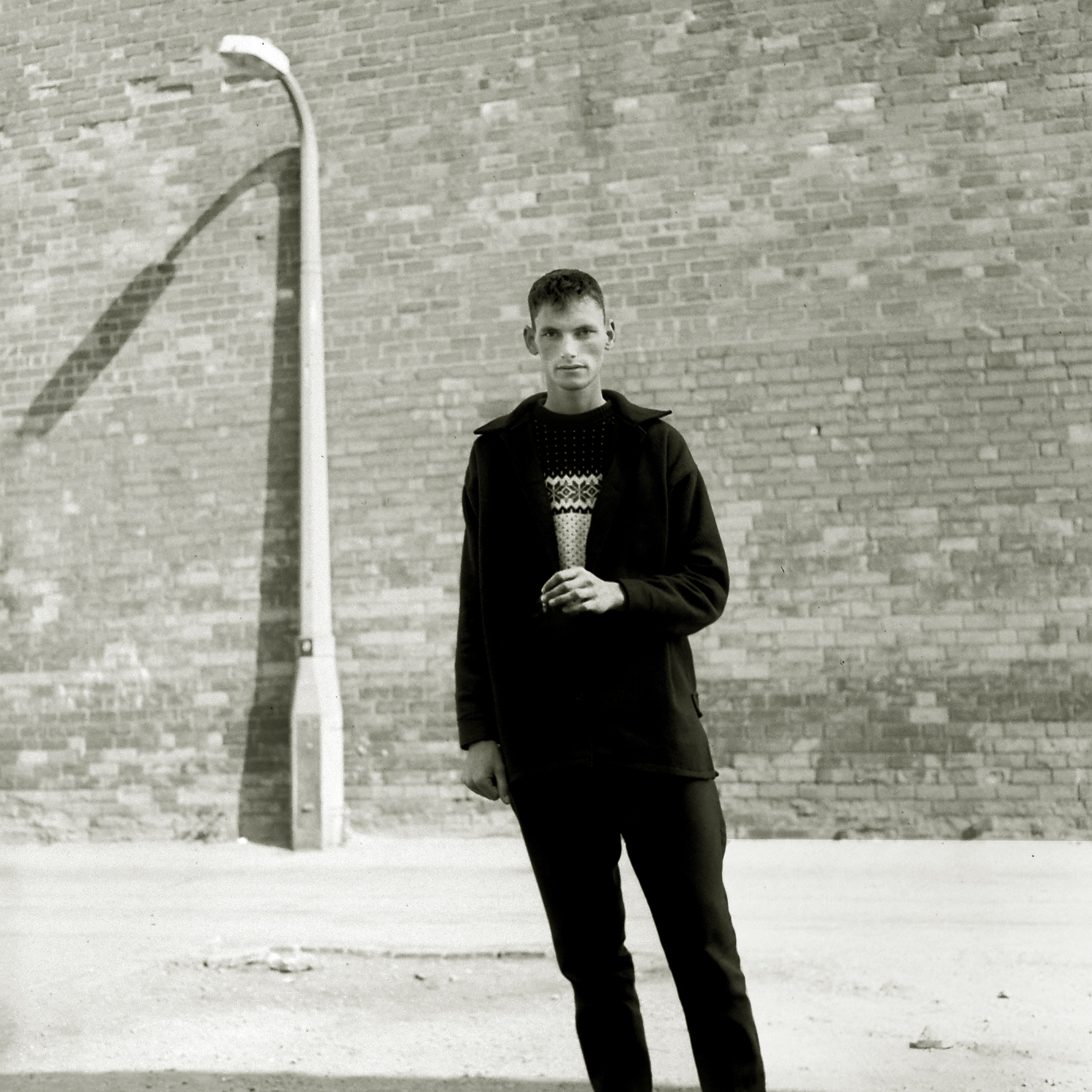
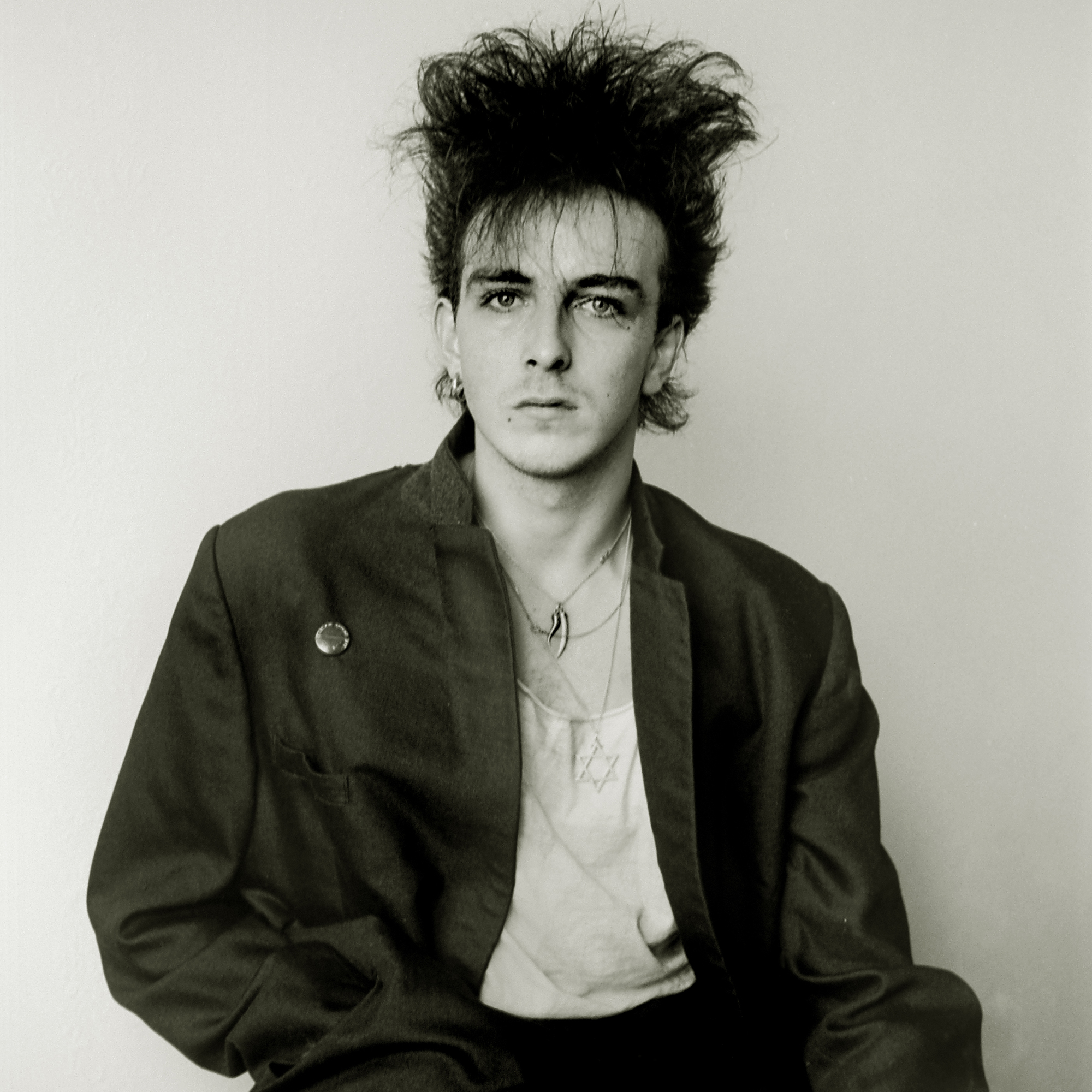
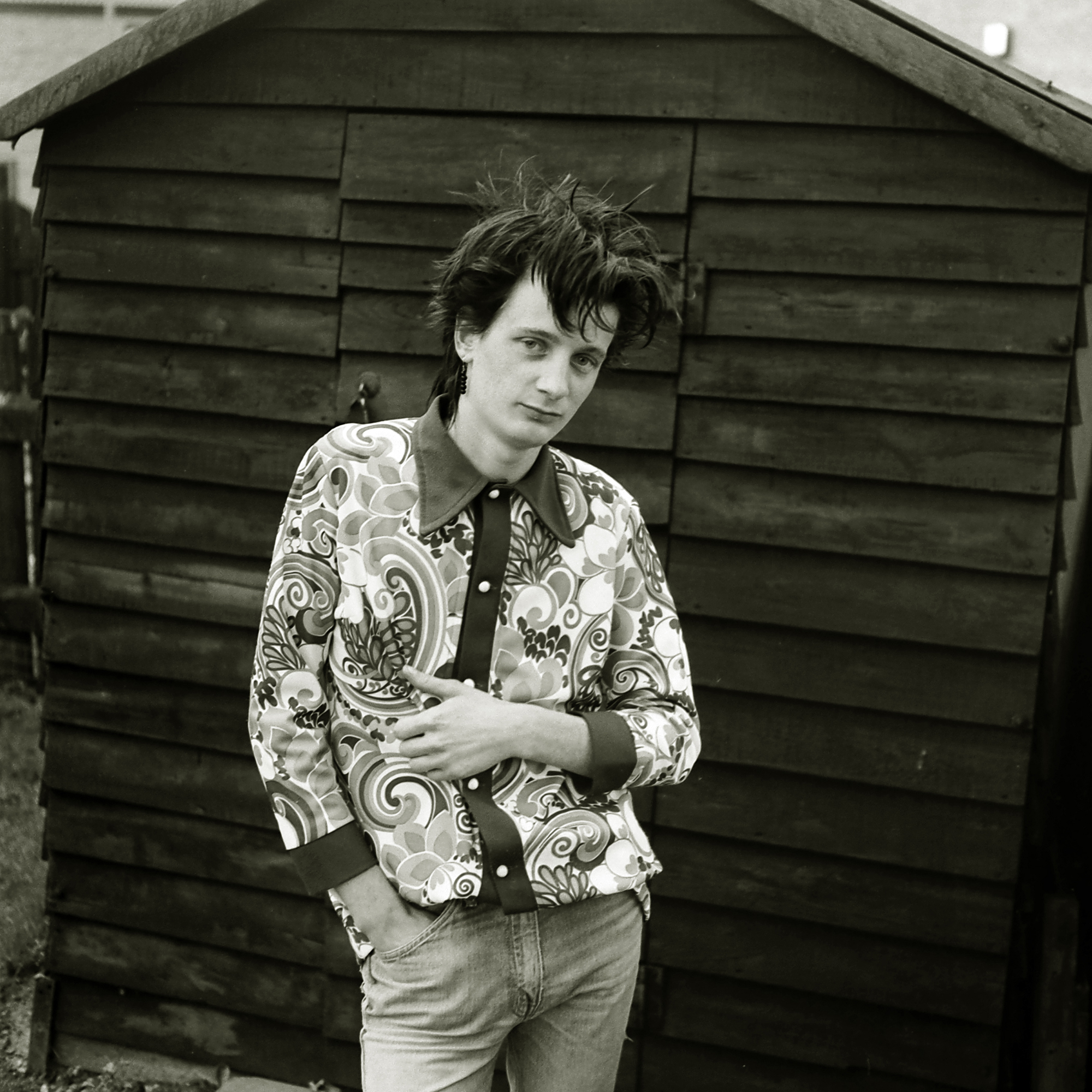
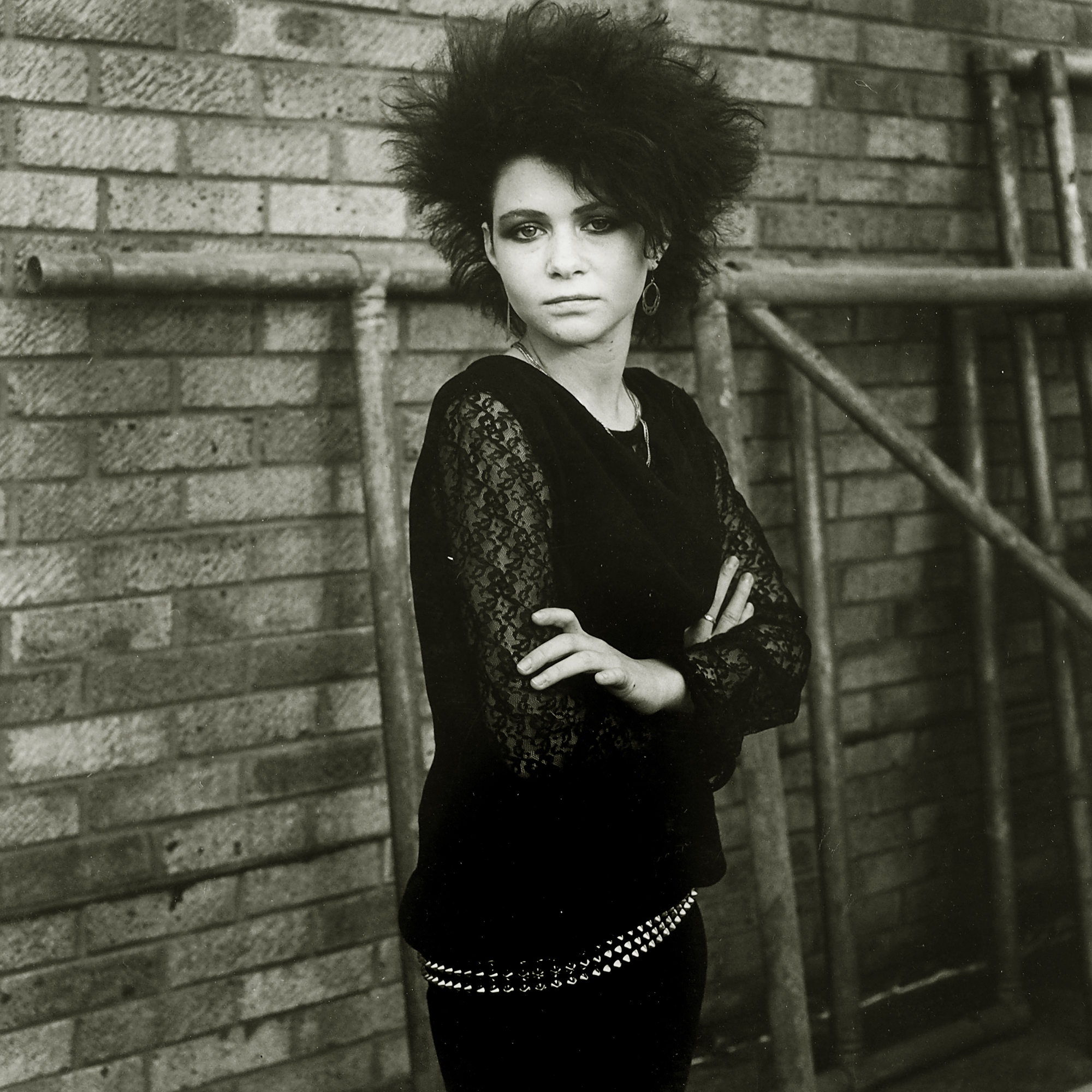
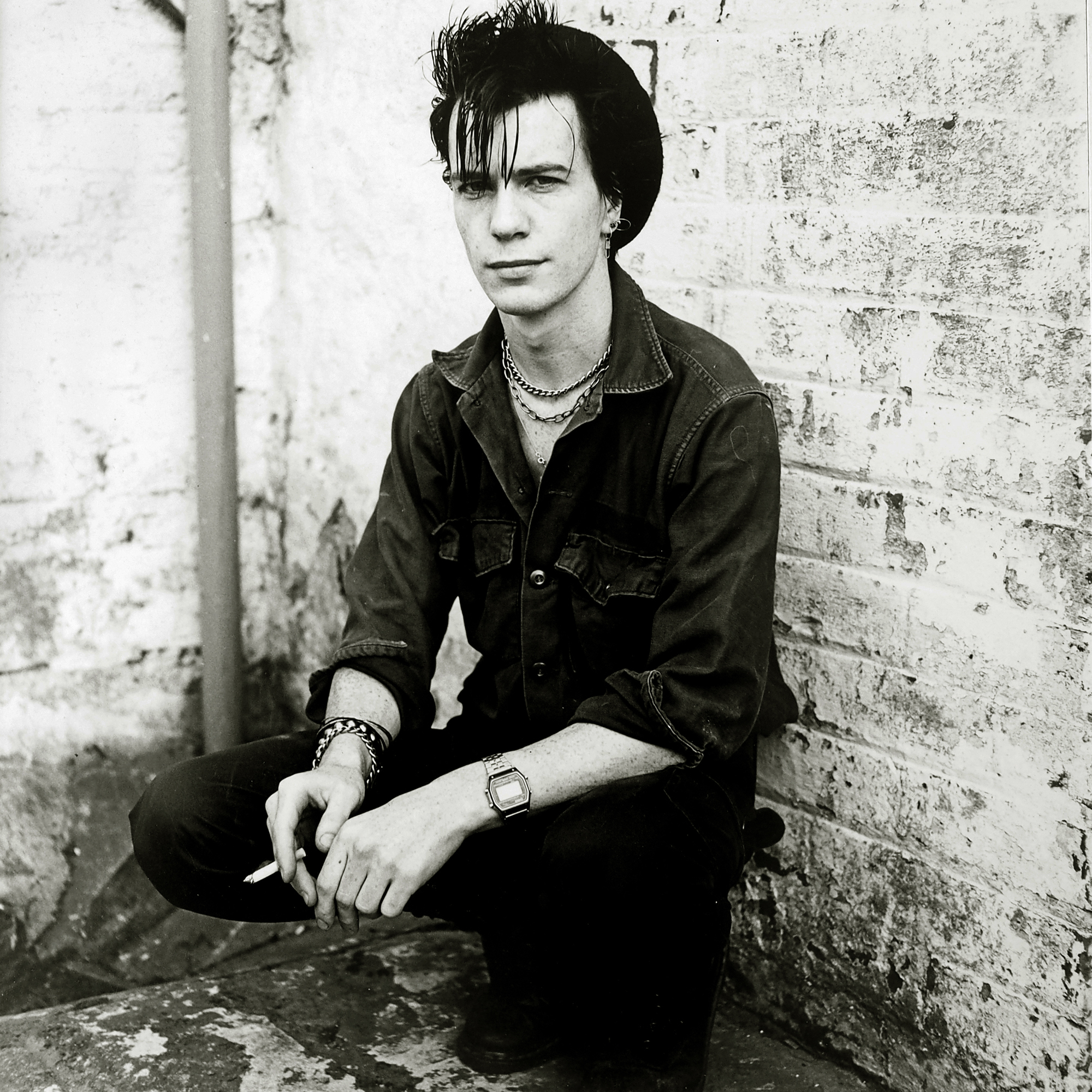
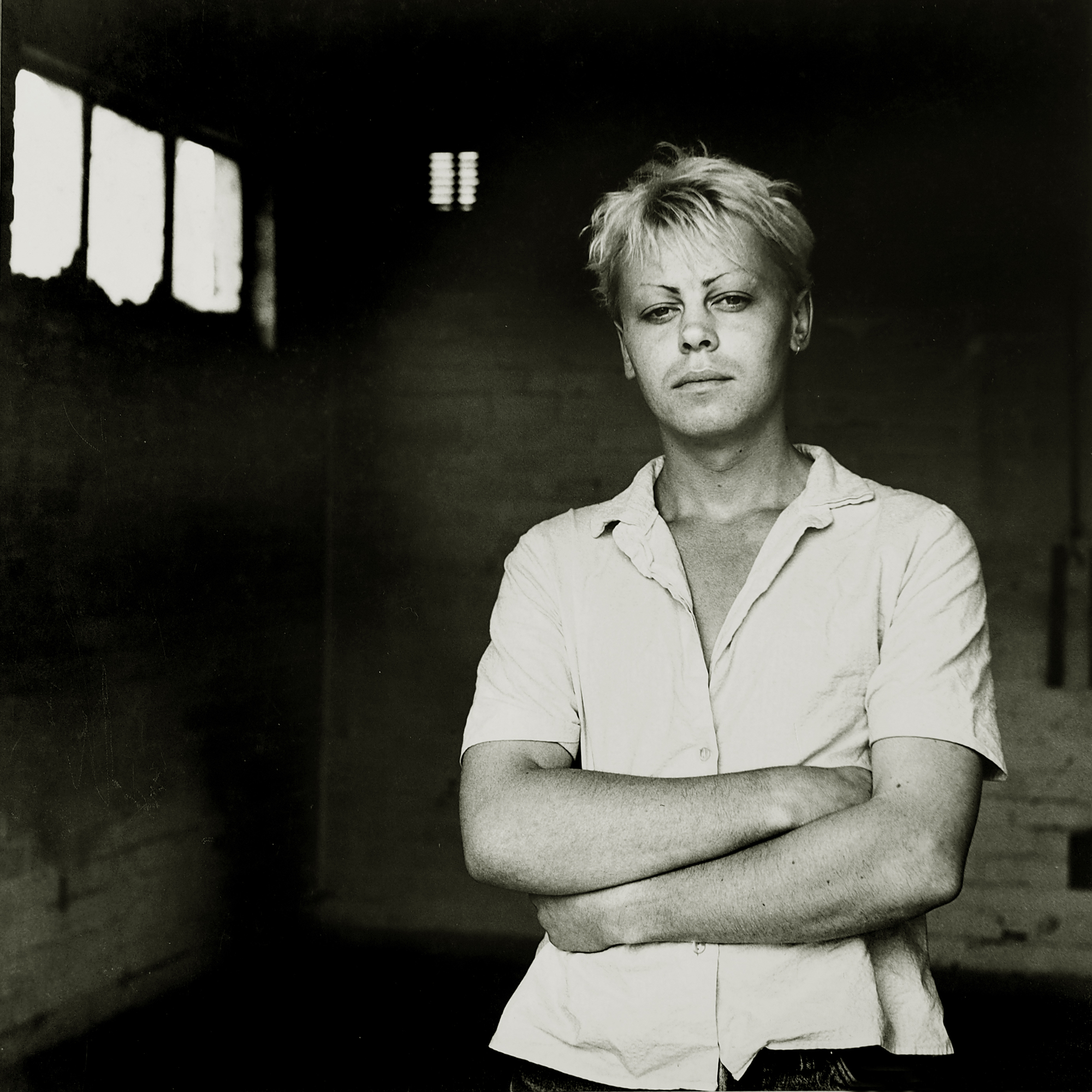
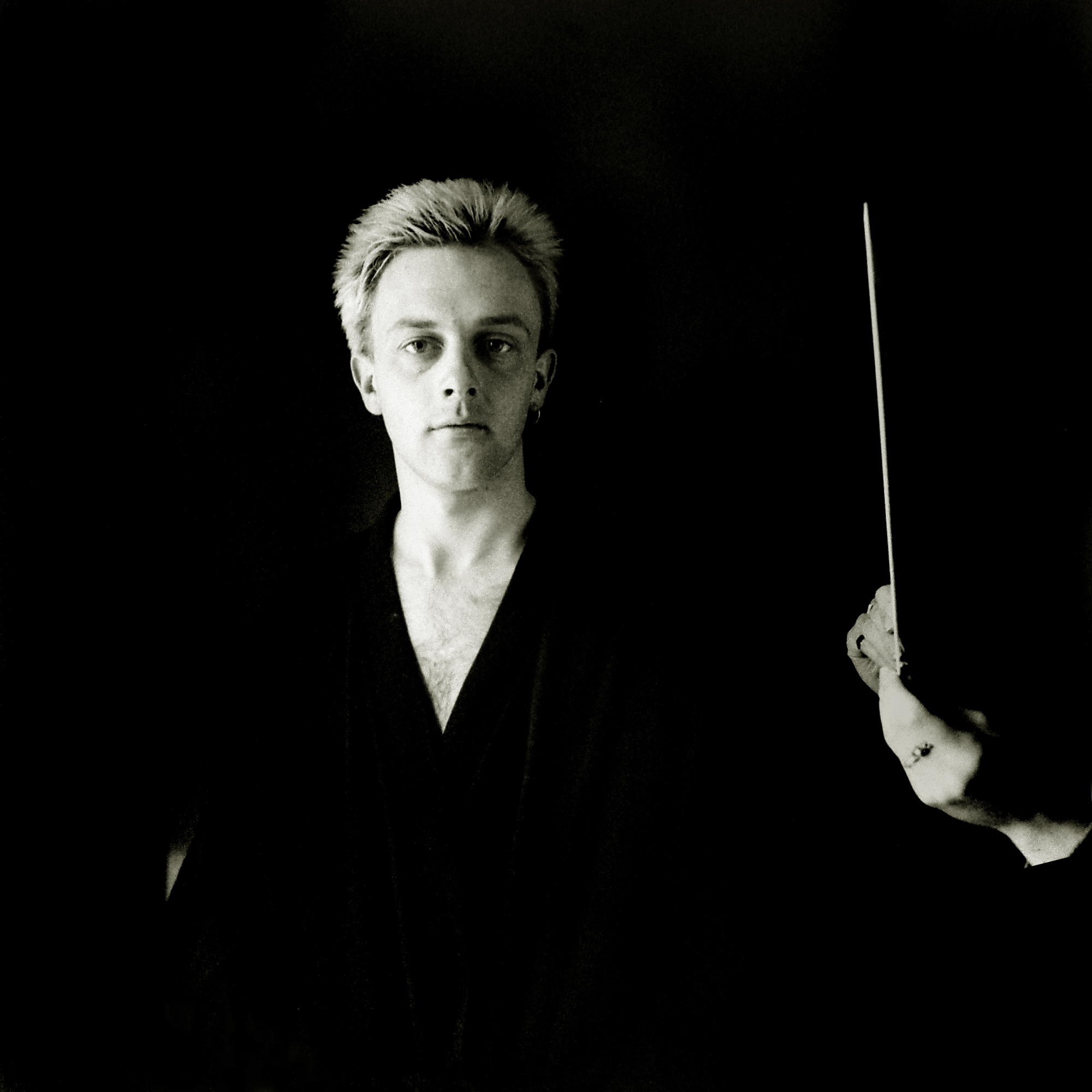
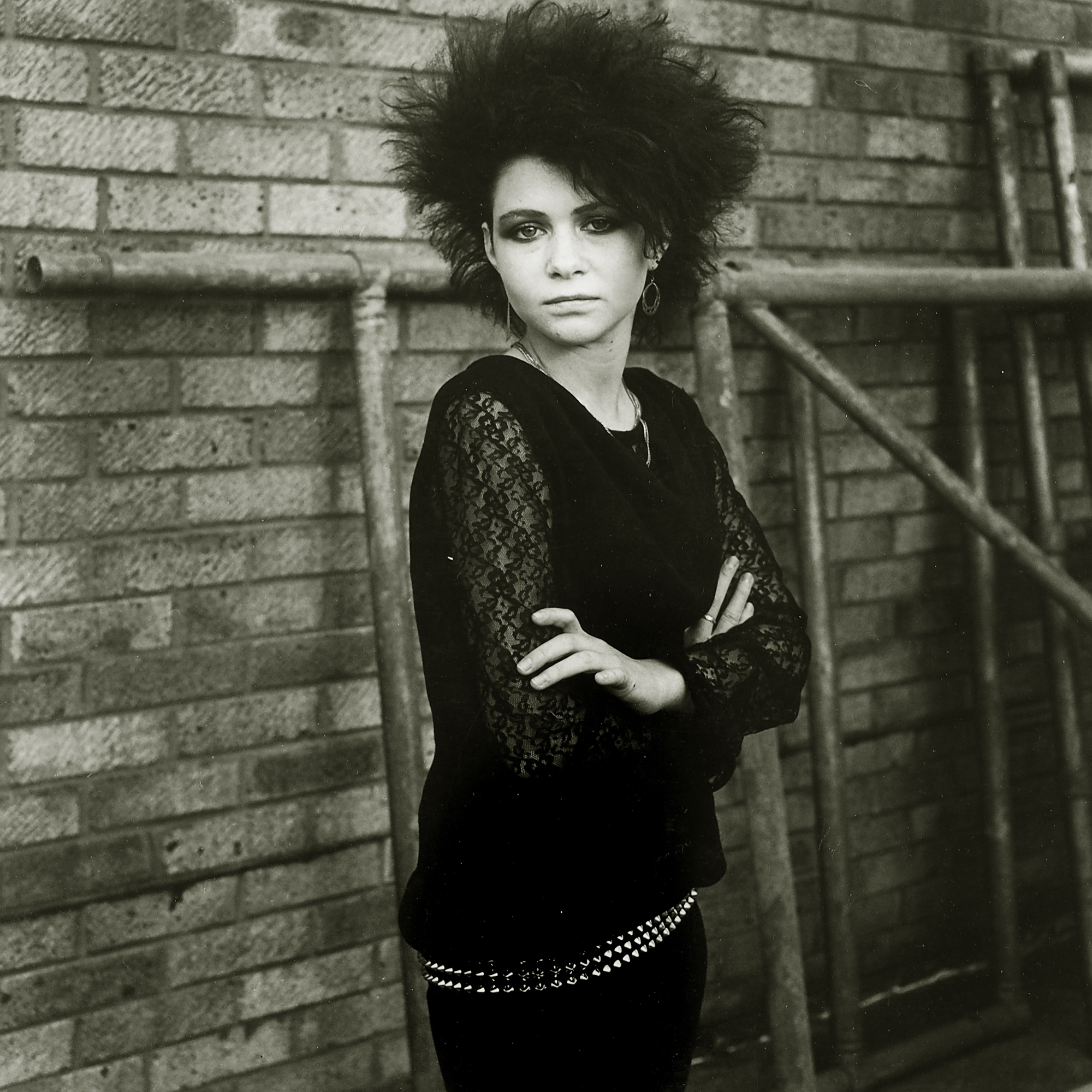
I look through the portraits that formed a late 1984, early 1985 project on an almost annual basis. My subject was the ‘alternative’ youth culture of Scunthorpe, a steel town in North Lincolnshire. I shall be there in six weeks’ time and it occurred to me that it will be the 35th anniversary of the project.

Kev

I am planning to track down some of these folk, see what they’re up to and, should they allow it, make another portrait. I originally shot around eighty portraits and I am hoping to track down about 24: I think that will be a project, and I think that then I can lay the thing to rest.

Tina

In 1985 I held a modest exhibition of around 48 portraits, mounted but unframed, in the local museum and gallery. I have moved around a lot since – including abroad – and about 24 of the original prints have accompanied me on my travels. About 4 years ago I discovered the complete set of negatives in a box stored in my brother’s garage. All in perfect condition.

Steph

I contact printed the lot and am hoping, nearer my visit, that social media – particularly local groups – will provide me with some contacts. A number are facebook friends, so I perhaps have a bit of a start there. I’m fairly optimistic.

Andy

Originally shot on film using a medium format – 6cm x 6cm – camera, I shall be using my digital camera for any new photographs. I am also going to be thinking about context.

Gaz
Lisa

I remember those days well, the project was a lot of fun. Along the way I met a lot of very resourceful and interesting people.

Margaret

I’m looking forward to catching up with old friends, finding out a little more about the many strangers I photographed. I do know that some of my subjects are, sadly, no longer with us; the new project will be a memorial to them.

Geoff

And if I am not successful? Well there will always be next year…

Mart
Graham

Thanks for taking the time to look at this small selection of images. If there are developments, I’ll be keeping you posted….

Old School: Contact sheets and a lesson learned too late…

Contact sheet: Badminton Horse Trials, 1980

As a photography student in the seventies I learned to make contact sheets; negatives sandwiched between glass and photographic paper in a frame purpose-built for the job. In the years following I continued the habit, though I used a heavy piece of glass instead of a frame. The above is an example. Scrutinizing these ‘proofs’ with a magnifying glass in one hand and a china-graph pencil in the other was a satisfying occupation, even better if you discovered you had a half decent photograph to work on. In the case of the above it appears that I found one – outlined in red – and which portrayed Princess Anne with her then husband, Captain Mark Phillips. I happened to pass them whilst strolling through the park.

Kay: Scunthorpe, 1984

In my defence, I never made contact sheets of the many rolls of film I used for a portrait project I undertook late 1984, early 1985 because I couldn’t afford to. The project, which was intended to reflect youth culture in Scunthorpe – an industrial town in the north of England – was done using a borrowed camera. Any money I had went on buying film and ensuring that final prints were made on paper with a heavy silver content, Ilford Galleria. These final selections were made by reading the negatives as best I could; the 6cm x 6cm format I opted for made this relatively easy. But then…

Kay, 1984: ‘Contact’ sheet, produced 2017 using a light tablet

I thought I’d lost the negatives for this project. Many moves to distant places meant that a lot of my stuff had been consigned to various lofts and garages. When they turned up in 2016 – my brother was renovating his garage – I was really pleased; that they were all in perfect condition was a lucky break (mice had once nested in the box and had damaged some of the other negatives stored in there).

Kay: Scunthorpe, 1984

Three years ago I set about making proofs of all the negatives using a light tablet; I laid them over the flicker-free surface and photographed them from above with my digital camera. On seeing the results I discovered that I may well have made alternative choices for my prints (I had a modest exhibition in the local art gallery in 1985); I also discovered that subjects I left out of the final selection may have made it after all. Above is an alternative shot of Kay which I prefer to the one I chose. The same goes for Paul, below: (original choice, contact sheets and revised selection)

Paul: Scunthorpe, 1984
Paul: Contact sheet, produced 2017
Paul: Scunthorpe, 1984

On a few occasions I found that my original choice was, for me, the correct one. This is Lisa:

Lisa: Scunthorpe, 1985
Lisa: Contact sheet, produced 2017

All in all, I made around 80 portraits. Thanks for visiting this blog. The camera I borrowed for the project was a Mamiya C330.